When Your Word Was Worth More Than Any Contract — The Slow Death of the Handshake Deal
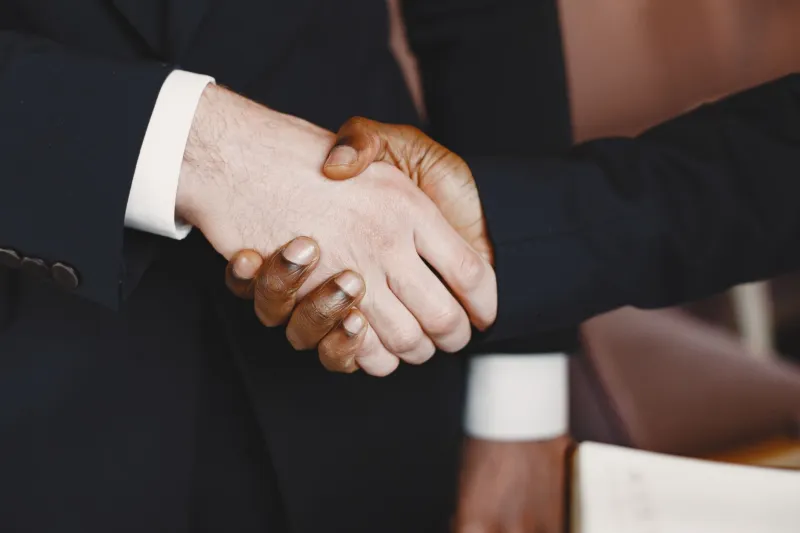
In a small town in rural Ohio in 1923, a farmer borrowed seed from his neighbor with nothing but a promise to repay after the harvest. No paperwork. No witness. No interest rate buried in paragraph fourteen. The loan was made and repaid because both men understood something that doesn't translate well to modern business: your reputation was the only currency that actually mattered, and once you spent it, you couldn't earn it back.
That world didn't vanish overnight. It eroded slowly, deal by deal, merger by merger, until one day we looked up and found ourselves in a country where buying a cell phone requires agreeing to a document longer than the United States Constitution.
The Economics of Being Known
The handshake economy wasn't built on naivety. It was built on geography.
When most Americans lived and worked within a tight radius — the same town, the same county, the same church, the same grain elevator — your reputation was a living thing that followed you everywhere. Cheat a business partner and you'd see him at the hardware store on Saturday. His brother-in-law would know by Sunday. By Monday, the whole community would be recalibrating their trust in you, and that recalibration had immediate, practical consequences.
Credit at the general store, a good price on a used tractor, a neighbor's help bringing in the harvest — all of it flowed from social trust. Break that trust and the losses were concrete and swift. The community itself was the enforcement mechanism, far more efficient than any court.
This wasn't limited to rural life. In American cities through much of the nineteenth and early twentieth centuries, business districts were defined by tight professional communities. Merchants knew each other. Bankers knew their borrowers personally. A man's word carried weight because the people he gave it to would remember whether he kept it.
The Handshake in Its Prime
The stories from this era read almost like folklore now, but the business practices were real. Cattle ranchers in Texas moved thousands of head on a verbal agreement and a handshake, with payment to follow weeks later when the animals reached market. Lumber dealers in the Pacific Northwest extended credit to logging operations based on nothing more than a known name and a track record.
In the garment district of New York City as late as the mid-twentieth century, million-dollar fabric orders were routinely placed over the phone with no written confirmation — a system that functioned because the community of buyers and sellers was small enough that everyone's history was common knowledge. Breaking a verbal agreement didn't just cost you one deal. It cost you the industry.
Even in law, the culture reflected this. Lawyers who knew each other well routinely accepted each other's word on procedural matters, extensions, and agreements without demanding it in writing. The bar was a community, and your standing in it was worth protecting.
When Scale Broke Everything
The system began fracturing when American business outgrew the communities that made it work.
As companies expanded beyond their home regions, as railroads and then highways and then telecommunications made it possible to do business with people you'd never meet, the social enforcement mechanism stopped functioning. You can't shame someone in their community if they live a thousand miles away and you don't know anyone they know.
The corporation accelerated this transformation dramatically. When a business is a legal entity rather than a person with a face and a family, reputation operates differently. Corporations don't feel embarrassment. They don't run into their counterparties at church. The accountability that once lived in the community migrated — slowly, imperfectly — into the legal system.
Contracts got longer. Lawyers became essential intermediaries. Fine print proliferated not because people became less trustworthy in some moral sense, but because the social structures that had enforced trustworthiness disappeared. The paperwork was trying to replace something that paperwork fundamentally cannot replace.
What the Lawyers Inherited
It would be too simple to say the shift was all bad. Formal contracts do protect people, especially people without social power or community standing. The old handshake economy had a dark side — it worked best for those who were already part of the network, and it could be brutally exclusionary toward anyone the community decided to shut out. Women, Black Americans, immigrants, and anyone deemed an outsider often found that the handshake economy's trust didn't extend to them.
Written contracts, for all their sprawling complexity, create a certain equality of documentation. The terms are the terms, regardless of whether you went to school with the other party's father.
But something real was lost in the transaction. The handshake carried a human weight that no contract can replicate. It was a physical act of commitment, a moment where two people looked each other in the eye and staked something personal on the outcome. Modern agreements are executed by clicking "I Accept" on a screen, often without reading a single word.
Trust as Infrastructure
Economists have a term for the lubricant that makes markets function smoothly: social capital. It's the accumulated trust between people that allows transactions to happen quickly, cheaply, and without armies of intermediaries. The handshake economy was running on enormous reserves of social capital built up over generations of community life.
As those communities dispersed — as Americans became more mobile, more anonymous, more connected to distant networks than local ones — that social capital depleted. We replaced it with legal infrastructure, which works, but works slowly, expensively, and without any of the human warmth of the original.
The average commercial contract today runs dozens of pages. The average small business owner spends thousands of dollars a year on legal fees for agreements their grandfather would have settled in five minutes over a cup of coffee.
Was the trade worth it? That depends entirely on who you ask — and whether they were ever welcome at the table in the first place.