The Suit That Lasted a Lifetime — How America Went From Wearing Clothes to Discarding Them
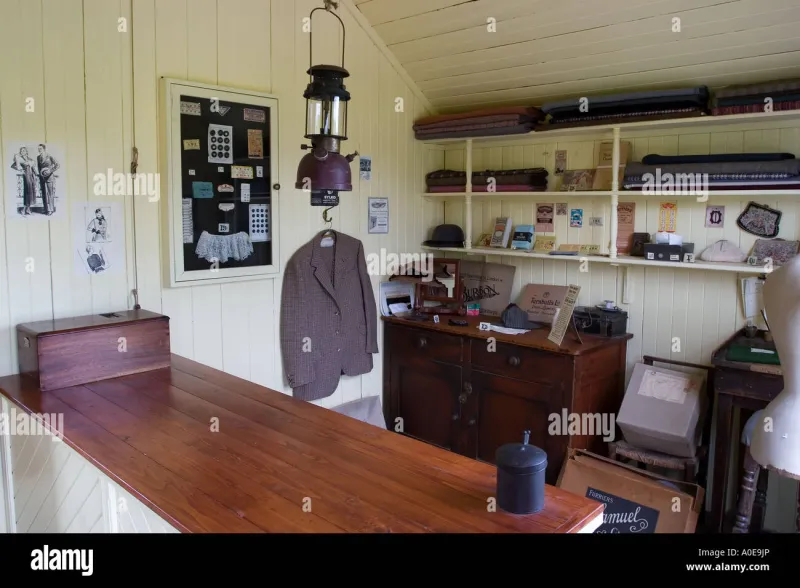
Photo: vintage American tailor shop clothing repair 1940s 1950s, via c8.alamy.com
There's a photograph in a lot of American family archives: a great-grandfather in a dark suit, standing stiff and proud for the camera. Maybe it's a wedding. Maybe it's a Sunday after church. What's striking, if you look carefully at the family photos across the decades, is that it's often the same suit. Different occasions, same jacket. Same vest, same cut — worn until the fabric tells the whole story of a life.
That wasn't poverty. That was just how people related to clothing.
For most of American history, what you wore was a significant financial investment, maintained with genuine care and replaced only when absolutely necessary. The idea of buying a shirt because it was on sale, wearing it a handful of times, and throwing it away would have struck earlier generations as somewhere between wasteful and incomprehensible. Today, it's basically the business model of an entire industry.
When Clothing Was a Capital Purchase
In the 19th and early 20th centuries, fabric was expensive and labor-intensive to produce. A working-class family in 1900 might own a handful of outfits — work clothes, Sunday clothes, maybe something for special occasions. Each garment represented real money and real hours. Women mended seams, turned collars, let out hems, and patched elbows as a matter of routine. Men's suits were built to last decades and were often altered as bodies changed.
The Sears catalog, which became a fixture of American life in the 1890s, listed clothing prices that, adjusted for wages of the time, represented a substantial outlay. Buying a coat wasn't a casual decision. It was deliberate, often saved for, and expected to provide years of use.
Hand-me-downs weren't a source of embarrassment — they were practical logic. Younger siblings inherited older siblings' clothes as a matter of course. Worn-out garments were repurposed as rags, quilts, or stuffing. Nothing was discarded before its usefulness was completely exhausted.
The First Crack: Synthetic Fabrics
The shift began quietly in the 1940s and 50s. Nylon had arrived during World War II, famously replacing silk in women's stockings when silk was diverted to parachutes. After the war, synthetic fibers — polyester, acrylic, rayon — entered the mass market with a promise that appealed to a newly prosperous America: easy care, low cost, no ironing required.
Synthetics changed the economics of clothing in ways that weren't immediately obvious. Natural fibers like wool, cotton, and linen are durable. They age. They can be repaired. Synthetics, by contrast, tend to degrade rather than wear — they pill, they fade, they lose their shape. But because they were cheaper to produce, garments made from them cost less to buy, which subtly changed consumer expectations. If a shirt cost a fraction of what a cotton equivalent once did, replacing it felt less consequential.
The cultural appetite for novelty, amplified by postwar prosperity and the emerging power of advertising, did the rest. Fashion cycles that once turned over across decades began moving faster. What was stylish in 1955 felt dated by 1960.
The Offshore Manufacturing Revolution
The real acceleration came in the 1970s and 80s, when American clothing manufacturers began moving production overseas — first to Japan and Hong Kong, then to South Korea and Taiwan, then to Bangladesh, Vietnam, and beyond, wherever labor costs were lower. The price of garments fell sharply. By the 1990s, clothing had become genuinely cheap in a way it had never been before in human history.
Retailers responded to falling costs with volume. If margins were thinner per item, the answer was to sell more items. Trend cycles shortened. Seasonal collections multiplied. The concept of "fast fashion" — clothing designed to be inexpensive, fashionable for a moment, and replaceable — moved from the fringe to the mainstream. Chains like H&M and Zara perfected a model where new inventory arrived weekly, training shoppers to browse constantly rather than purchase deliberately.
The numbers are stark. In 1980, the average American bought roughly 12 new garments a year. By the early 2000s, that figure had climbed to around 65. Today it sits near 70, with estimates suggesting Americans collectively discard around 11 million tons of clothing annually — the vast majority of it going straight to landfills.
What Got Lost in the Wardrobe
The economic and environmental costs of fast fashion have been well documented. But there's a subtler loss that's harder to quantify. Earlier generations had a relationship with their clothing that was genuinely different in character — more attentive, more connected to the labor involved in making and maintaining a garment.
Knowing how to sew on a button, let out a seam, or darn a sock was considered basic adult competence well into the mid-20th century. Home economics classes taught these skills in schools across the country. The act of repairing something — rather than replacing it — carried a kind of quiet dignity. It said: this is worth preserving.
That sensibility didn't disappear because people became lazy or careless. It disappeared because the economics stopped supporting it. When a new shirt costs less than the thread and time required to repair the old one, the rational choice shifts. The culture follows the incentives.
The Pendulum Begins to Swing
There are signs that some Americans are pushing back. Thrift stores have surged in popularity, particularly among younger shoppers who've reframed secondhand clothing as sustainable rather than stigmatized. Clothing rental services, repair cafes, and the broader "buy less, buy better" movement have found genuine audiences. Vintage clothing has become a legitimate fashion category rather than a last resort.
Whether these trends represent a real cultural shift or a niche countermovement within a much larger throwaway economy remains to be seen. The fast fashion machine is still running at full speed.
But the fact that people are asking the question at all — is this shirt worth keeping? — would have seemed like a strange question to anyone who lived through the era when the answer was never in doubt.