When Scripture Lived Inside You — Before the Search Bar Replaced the Memorized Word
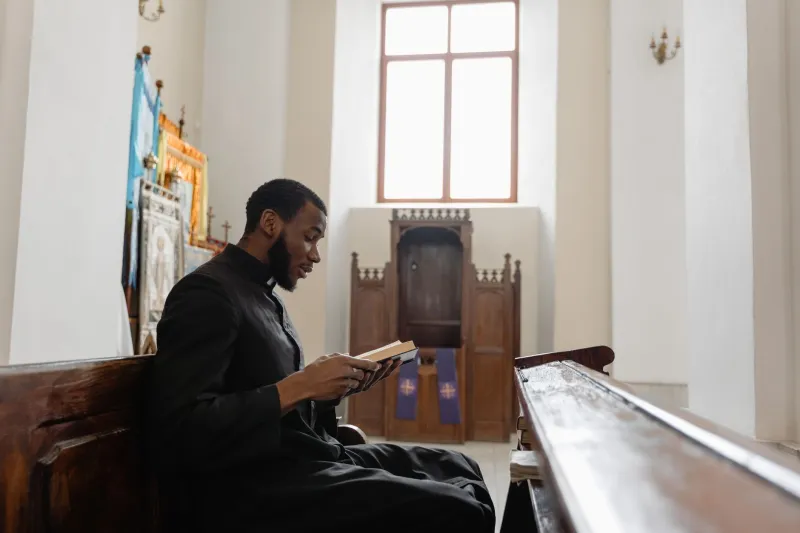
Ask most Americans today to recite a Bible verse from memory and you'll get a nervous laugh, maybe the opening line of Psalm 23, and then a quiet reach for a phone. That's not a criticism — it's just the reality of how we store information now. But it wasn't always this way. Not even close.
A hundred years ago, memorizing extended passages of scripture wasn't a party trick reserved for ministers and Sunday school champions. It was ordinary. It was expected. Children drilled Bible verses the way kids today practice multiplication tables, and adults could call up chapter and verse on command — at the dinner table, in conversation, in moments of grief or celebration. The words weren't something you looked up. They lived inside you.
So what happened?
The Memorizing Mind
Before the printing press made books widely available, and long before smartphones made every text searchable, the only reliable place to store important words was the human brain. Ancient and early Christian communities passed scripture orally. Medieval monks committed entire psalms to memory as a form of devotion. By the time American Protestantism took root in the colonial era, memorization had become deeply embedded in religious culture — not just as a learning tool but as a spiritual practice. To know the words by heart was to carry God's instruction with you wherever you went.
Early American schooling reinforced this. The New England Primer, one of the first widely used textbooks in the colonies, was packed with scripture and religious verse. Students were expected to memorize it. By the 19th century, the practice extended beyond religious households — poetry, passages from Shakespeare, and civic texts like the Gettysburg Address were all standard memory work in American classrooms. The ability to recite from memory was considered a mark of education and character.
For religious families, the stakes felt even higher. Memorizing scripture wasn't just academic. It was protective. You might not have a Bible in the field, or on the road, or in a moment of crisis. But if you had memorized it, you were never without it.
The Quiet Outsourcing
The first shift came gradually. As printed Bibles became cheaper and more widely distributed through the 19th and early 20th centuries, the urgency of memorization softened. If the book was always nearby, the pressure to carry its contents in your head eased naturally. Churches still encouraged verse memorization, but the cultural expectation — the one that had made recitation a basic life skill — began to loosen.
Then came the second wave. By the mid-20th century, American education started moving away from rote memorization across the board. Progressive education reformers argued that understanding was more valuable than recitation, that drilling children on words they didn't yet comprehend was hollow. The pendulum swung. Memorization became associated with old-fashioned, mechanical learning. Schools began to emphasize comprehension and critical thinking over the ability to reproduce text.
That shift had genuine merit. But it came with a cost that wasn't obvious at the time.
Then the Phone Arrived
If gradual printing access was the first crack in memorization culture, the smartphone was the wrecking ball. When BibleGateway launched in the late 1990s and eventually became mobile-friendly, and when apps like YouVersion put the entire Bible — in dozens of translations — on every phone, the last practical argument for memorizing scripture evaporated. Why store it in your head when you could retrieve any verse in four seconds?
The numbers reflect the shift. YouVersion reports over 700 million downloads worldwide. Searches for specific verses spike on Sunday mornings and around holidays. Americans are engaging with scripture — just not in the way their great-grandparents did. The words are more accessible than ever. They're just not as deeply embedded.
And that distinction matters more than it might seem.
Something Stored Differently
There's a difference between knowing something and being able to find it. Psychologists who study memory have long noted that information we memorize becomes integrated into our thinking in ways that retrieved information simply doesn't. When you've memorized a passage, it surfaces in unexpected moments — when you're scared, when you're angry, when you're sitting with someone who's dying. It shapes the way you process experience because it's already inside the experience.
Information you look up stays external. It answers a question. It doesn't rewrite how you feel at 2 a.m.
This isn't unique to scripture. The same argument applies to poetry, to music lyrics, to the phone numbers we no longer bother to retain. We've outsourced memory to devices, and in doing so we've changed the texture of what it means to know something. The words are available. But they're not ours in the same way.
What Earlier Generations Understood
People who grew up memorizing scripture often describe it differently than people who grew up looking it up. For them, the familiar verses aren't data points — they're companions. They arise unbidden. They offer comfort in a way that a search result, however accurate, simply can't replicate.
There's something worth sitting with in that. Not a call to abandon smartphones or pretend the internet isn't useful — it obviously is. But a recognition that the older practice of memorization wasn't just inefficiency waiting to be optimized away. It was a way of making certain words genuinely your own, woven into the fabric of how you thought and felt and moved through the world.
We've gained something enormous in accessibility. The question is whether we've noticed what we quietly set down in exchange.