The Class That Taught You How to Actually Live — Before Schools Stopped Caring About Real Life
In 1965, a sixteen-year-old girl in suburban Michigan could walk out of her high school knowing how to plan a week of nutritionally balanced meals, execute a basic sewing repair, and manage a household budget on a modest income. Her male classmate down the hall could wire a simple electrical circuit, build a small piece of furniture from raw lumber, and diagnose a few common problems under a car hood.
Neither of them would have called these skills impressive. They were just what school taught you. It was assumed that grown-up life would require grown-up competencies, and that preparing students for grown-up life was part of what schools were for.
That assumption, it turns out, was not permanent.
The Golden Age of Practical Education
For much of the twentieth century, American public schools operated on a broader definition of what education meant. Academic subjects — English, math, history, science — formed the core. But running alongside them was an equally serious commitment to what educators called "practical arts" or "vocational education": courses designed to equip students with the skills they'd need to function as independent adults.
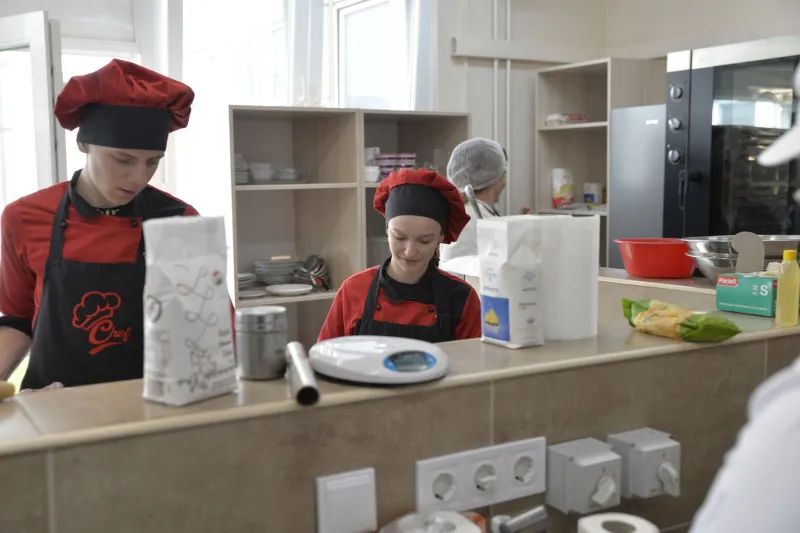
Home economics classes were ubiquitous from roughly the 1920s through the 1970s. At their best, they taught far more than cooking and sewing. Students learned food science, nutrition, household budgeting, child development, and basic first aid. The curriculum was designed to demystify the actual work of running a household — work that, before modern conveniences, was genuinely complex and demanding.
Shop class — woodworking, metalworking, auto mechanics — gave students hands-on experience with tools, materials, and mechanical systems. Many schools had fully equipped auto shops where students learned to perform basic maintenance on real vehicles. Wood shops produced furniture, cabinets, and small structures. Metal shops taught welding and fabrication.
Swimming was a required physical education component in many districts. Typing — real, disciplined typing, not hunt-and-peck — was considered an essential workplace skill and taught accordingly. Some schools offered basic accounting, drafting, and even agriculture.
The underlying philosophy was practical and democratic: every student, regardless of whether they were headed to college or directly into the workforce, needed a foundation of real-world competency.
The Test That Changed Everything
The dismantling of practical education didn't happen all at once. It happened in waves, each one driven by a different anxiety about American schools.
The launch of Sputnik in 1957 triggered the first major push toward academic rigor at the expense of practical coursework. If the Soviets were beating us in space, the thinking went, we needed more math and science — not more woodshop. Federal funding began flowing toward academic subjects.
But the real turning point came in the 1980s and accelerated through the 1990s and 2000s. A 1983 federal report called "A Nation at Risk" declared American education dangerously inadequate by international standards. The response was a sustained push toward standardization, measurable outcomes, and academic accountability.
The No Child Left Behind Act of 2001 institutionalized this approach at the federal level, tying school funding to performance on standardized tests in reading and math. Suddenly, every hour spent in a wood shop or a home ec kitchen was an hour not spent preparing for a test that the school's funding depended on.
Practical courses got cut. Not immediately, not everywhere, but steadily. Home economics was rebranded as "Family and Consumer Sciences" and often reduced to a single elective semester. Shop classes closed as the equipment aged and wasn't replaced. Swimming pools were shuttered for liability and budget reasons. The curriculum narrowed around the measurable, and the measurable was almost entirely academic.
The Adults Schools Made
The consequences of this shift are visible in ways that are sometimes funny and sometimes genuinely troubling.
Surveys consistently show that large percentages of American adults cannot perform tasks that previous generations considered basic. A 2019 survey found that roughly a third of Americans had never changed a tire. Studies on financial literacy show that many adults in their twenties and thirties have little understanding of compound interest, insurance basics, or retirement account mechanics — topics that a good home economics or personal finance class would have covered.
Hospital emergency rooms see adults who can't perform basic first aid. Food banks report that many of the people they serve don't know how to cook the raw ingredients they receive. Young renters move into their first apartments without knowing how to unclog a drain, hang a shelf, or identify when a circuit breaker has tripped.
None of this is a character failing. These people weren't taught. The school system made a collective decision that these things weren't its job anymore.
The College Prep Tunnel
The shift toward academic standardization carried an embedded assumption: that the primary purpose of high school was to prepare students for college. This was, at minimum, an incomplete vision of what schools owe young Americans.
College enrollment rates have risen substantially over the past fifty years, but they're still nowhere near universal — and college itself doesn't teach you to cook a chicken, fix a leaky faucet, or understand your health insurance deductible. The practical gaps in American adult life aren't filled by a bachelor's degree in communications.
There's a growing movement to bring life skills back into schools. Some districts have reintroduced financial literacy requirements. A handful of states have mandated basic cooking instruction. Vocational and technical education has seen a modest rehabilitation as the trades have become both more respected and more lucrative. But these efforts remain scattered and underfunded compared to what once existed as standard curriculum.
What a Real Education Looked Like
The students who came out of mid-century American schools weren't necessarily smarter than today's graduates. They weren't better at calculus or literary analysis. But they possessed a kind of practical confidence — a sense that adult life, with all its mundane demands, was something they'd been prepared for.
That confidence isn't just about knowing how to change oil or hem a pair of pants. It's about understanding that the physical world is navigable, that problems have solutions, and that you have the basic competency to find them.
We built a generation of students who can take a standardized test and struggle to boil pasta. That's not progress. That's a trade we made without fully understanding what we were giving up.