The Last Time America Heard the Same Song Together — And Didn't Know It Was the Last Time
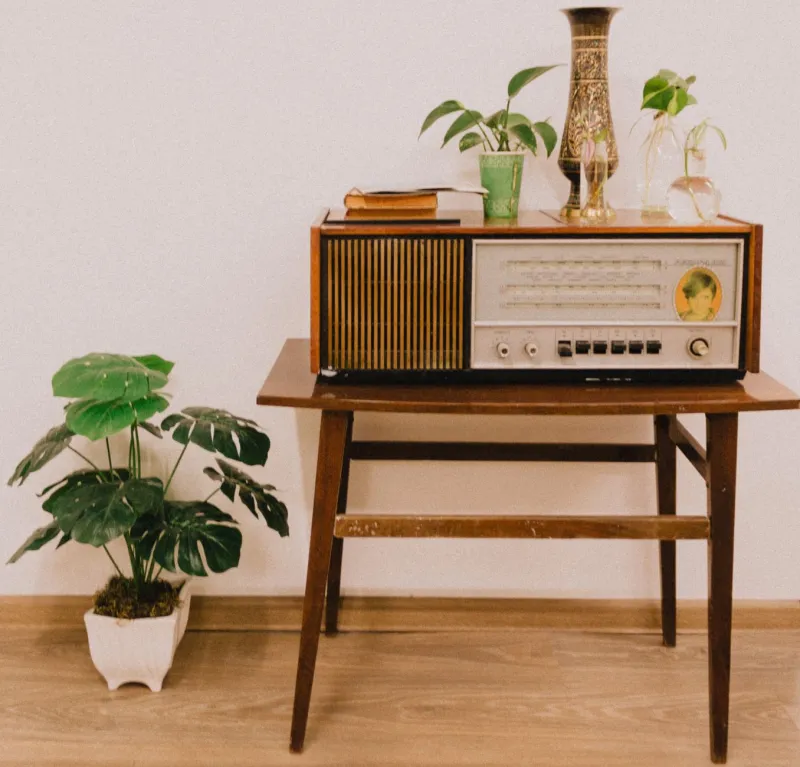
The Last Time America Heard the Same Song Together — And Didn't Know It Was the Last Time
Somewhere in the mid-1980s, a factory worker in Akron, a teenager in Baton Rouge, and a grandmother in Portland, Oregon, were all listening to the same song on the radio without knowing it. They'd never meet. They had nothing obvious in common. But for three minutes and forty seconds, they shared something real — a melody, a lyric, a feeling that was, for that brief window, genuinely national.
That kind of accidental togetherness is almost impossible now. And most of us didn't notice when it ended.
When the Radio Decided What You Loved
For most of the twentieth century, music wasn't something you chose so much as something that found you. The radio played what the radio played. You could change the station, sure, but you were still choosing from a narrow menu curated by local DJs, regional program directors, and eventually the Billboard charts — a system that, for all its commercial messiness, created an involuntary common culture.
In the 1950s and 60s, families gathered around living room radios the way earlier generations had gathered around fireplaces. The Ed Sullivan Show didn't just introduce America to the Beatles in February 1964 — it introduced them to all of America at once, to roughly 73 million viewers on the same night, at the same hour. There was no algorithm deciding who deserved to see it. No personalized feed that might have buried it under something more "relevant." It simply happened to everyone simultaneously.
Jukeboxes did something similar at the neighborhood level. Walk into a diner in Cleveland or a roadhouse in Tennessee and you'd hear the same fifteen or twenty songs cycling through — the hits of the moment, chosen by a combination of what the distributor stocked and what locals kept feeding quarters into. Music was communal by default, not by design.
The Mixtape Was Already a Warning Sign
The cassette tape was the first hint that something was shifting. Suddenly, you could record your own sequence of songs, build your own listening experience, give someone a curated window into your private musical world. It felt revolutionary. It was revolutionary. But in hindsight, the mixtape was also the first step away from the shared soundtrack.
The Walkman arrived in 1979 and let you take that private world with you into public space. Now you could walk through a crowd while hearing something completely different from everyone around you. Music began its long migration from shared experience to personal cocoon.
CDs accelerated the shift. Music videos on MTV created stars at a national scale — but also began fragmenting audiences by genre in ways Top 40 radio never quite had. By the 1990s, you could be deeply into grunge while your coworker was equally deep into gangsta rap and your neighbor was still spinning country, and the three of you might share almost no musical common ground at all.
The Algorithm Finished the Job
Streaming didn't just change how we access music. It fundamentally changed the social role music plays in American life.
Spotify, Apple Music, and YouTube Music don't just respond to your preferences — they amplify and reinforce them, building feedback loops so efficient that two people sharing an apartment can have listening histories with almost zero overlap. The algorithm is extraordinarily good at keeping you inside your own taste. That's the product. That's the point.
Consider the numbers. In 1984, "When Doves Cry" by Prince spent five weeks at number one and sold millions of copies to people who heard it on the radio whether they went looking for it or not. In 2024, a song can rack up hundreds of millions of streams and still be completely unknown to a huge slice of the population. Chart dominance no longer means cultural ubiquity.
There's no longer a moment equivalent to the Sullivan show — no single broadcast event that puts the same song in front of virtually every American household at once. The Super Bowl halftime show comes closest, and it's telling that it's become one of the most culturally discussed moments of any given year precisely because it's one of the last things we all watch together.
What We Gained, What We Lost
It would be dishonest to pretend the old system was purely good. Radio playlists were gatekept by people with real biases. Entire genres — Black music, regional sounds, anything that didn't fit the format — got systematically excluded from mainstream airplay for decades. The democratization of music discovery genuinely opened doors that were previously welded shut. Artists who would never have gotten a callback from a major label now build global audiences from a bedroom studio.
But something quieter slipped away in the process. Music used to create accidental solidarity. You didn't choose to love a song because an algorithm identified you as the target demographic — it just came on the radio, and it got you, and that same thing happened to millions of other people, and suddenly you had something in common with strangers you'd never spoken to.
There's a reason people who grew up in the same era can bond instantly over a song from their youth. That bond came from genuine shared exposure, not curated nostalgia. The music was in the air. Everyone breathed it.
The Soundtrack Nobody Shares
Ask a twenty-two-year-old today to name a song that everyone their age knows. They'll struggle. Not because the music is bad — there's extraordinary music being made right now — but because the infrastructure for shared experience no longer exists the way it once did. Their generation didn't have a Sullivan moment. They had ten thousand individual moments, each perfectly tailored, none of them universal.
Before, music arrived uninvited and became part of you. Now, you summon exactly what you already know you like, and it confirms what you already feel. It's more comfortable. It's also a little more alone.
The song playing in your earbuds right now might be the best thing you've heard all year. But somewhere across town, someone else is hearing something equally extraordinary — and the two of you will never accidentally share it.