Six Pots, One Knife, Dinner Every Night: What Our Grandmothers Knew About Kitchens
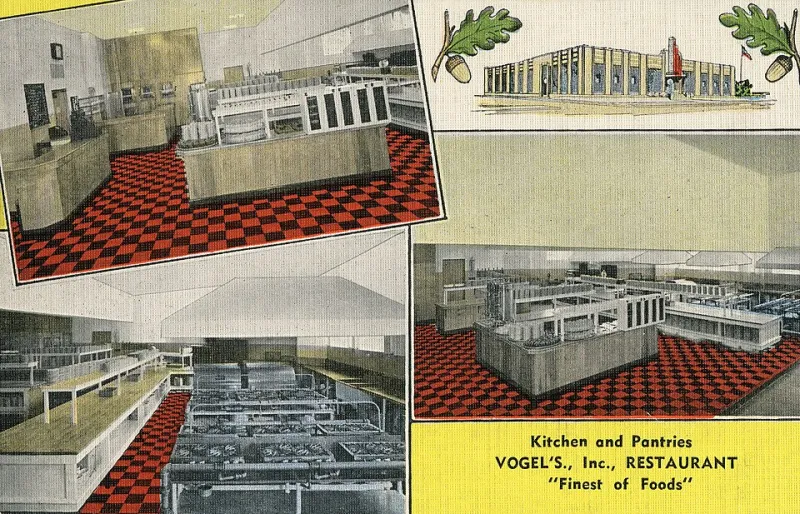
Photo: Steve Shook from Moscow, Idaho, USA, CC BY 2.0, via Wikimedia Commons
Open your grandmother's kitchen drawer in 1955 and you'd find, roughly: a paring knife, a rolling pin, a wooden spoon, a whisk, a can opener, and a spatula. Maybe a meat grinder if the family was ambitious. That was the inventory.
Now open yours. Somewhere in there is an avocado slicer. A dedicated egg-cooking appliance. A garlic rocker, a cherry pitter, a spiralizer, a mandoline with a safety guard you've never once used, and an air fryer that has quietly annexed half the counter. The average American kitchen now contains well over a hundred tools and appliances.
And here's the uncomfortable question: are we cooking more? We are not. Not even close.
What Dinner Actually Took in 1955
Let's be honest about the past, though — it wasn't a paradise. It was labor. A 1950s homemaker spending three hours a day on meals wasn't being quaint; she was working a shift. Bread was baked or bought daily because nobody had a freezer. Vegetables required washing, peeling, and trimming because frozen convenience foods were still novel. Leftovers were a moral obligation, not a lifestyle brand.
But within that labor lived something we've almost entirely lost: competence. A woman who made pie crust every week for thirty years could make pie crust in her sleep, with any flour, in any oven. She didn't need a gadget to tell her an avocado was ripe — she squeezed it. The knowledge lived in her hands, not her drawers.
The Great Gadet Explosion
Then the marketing arrived. Postwar America had manufacturing capacity to repurpose and a booming consumer economy, and the kitchen became a frontier. Every problem you didn't know you had now had a dedicated plastic solution. The gadget industry discovered the secret formula: sell people the feeling of skill without the years of practice.
And to be fair, some of it worked. The food processor genuinely eliminated hours of chopping. The microwave changed leftovers forever. The rice cooker is a quiet marvel. Nobody's arguing we should give those up.
But somewhere along the line, the math stopped working. We kept buying tools that promised to make cooking easier — and simultaneously cooked less every decade. Time-use studies show Americans now spend roughly half the time on meal preparation that they did in the 1960s. The average household orders delivery or takeout multiple times a week. We built the most equipped kitchens in human history and then, increasingly, didn't use them.
We Outsourced the Skill, Then Outsourced the Tools' Job
There's a tidy little irony at the center of all this. First, we outsourced skill to equipment — you don't need knife work if you have a chopper, don't need technique if you have a machine. Then, when the equipment still required effort, we outsourced the equipment's job to DoorDash. The gadgets sit in the drawer, clean and barely used, while the delivery driver climbs the porch steps.
The result is a strange cultural position: we own more culinary capability than any generation ever has, and we possess less of it. Ask a competent 1955 home cook to make dinner from whatever's in the house and she'd manage, because she understood food, not recipes. Ask many modern kitchens the same question and the answer is the app on the phone.
Maybe the Drawer Isn't the Problem
To be clear, this isn't an argument for nostalgia or for three hours of daily drudgery. Nobody should want to go back to a life where dinner was a full-time job for one person. The liberation of the modern kitchen — faster prep, more choices, less grinding routine — is real progress, especially for the people who were trapped in that routine.
But there's a case for owning fewer things and knowing more. A good knife, a heavy pan, a pot with a lid, and a handful of techniques can produce better food than a drawer full of single-purpose plastic — and the confidence that comes with it is the actual luxury. The 1950s cook couldn't buy her way out of learning; we can, and mostly did, and mostly regret it a little at 6 p.m. when nothing's thawed.
The grandmother with six tools fed a family every night. The grandchild with sixty orders dinner. The tools were never the point. The point was that somebody in the house knew what to do with them — and that's the one gadget that was never sold in a store.