The Letter That Could Launch a Career — Before the Algorithm Decided Who Deserved an Audience
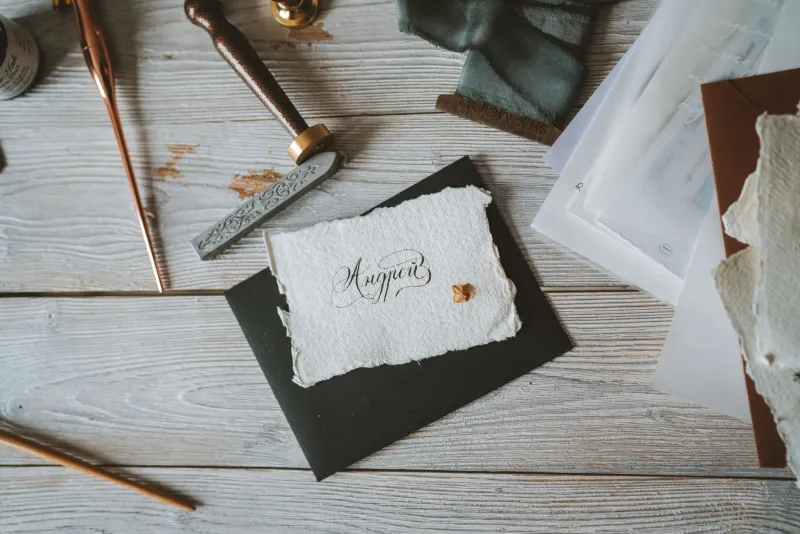
Somewhere in a box in someone's attic, there's probably a letter. Handwritten, carefully composed, maybe even rewritten twice before the final version was sealed and stamped. It went to a newspaper, or a radio station, or a famous author. And sometimes — not always, but sometimes — it changed everything.
That was the old system of recognition. It was slow. It was uncertain. But it was also surprisingly democratic in ways we've stopped appreciating.
When Letters Were the Only Stage You Had
Before social media, before blogs, before anyone had a "platform," ordinary Americans had exactly one reliable way to make their voice heard beyond their immediate circle: they wrote things down and mailed them somewhere important.
Letters to the editor were a genuine institution. Newspapers across the country published reader correspondence as a matter of civic pride. A sharp, well-argued letter could earn you a published byline in the Chicago Tribune or the Los Angeles Times — and that kind of visibility carried real weight. People read those sections. Editors noticed recurring names. Writers got discovered. Careers began.
The same was true of fan mail. It sounds quaint now, but fan letters to celebrities, authors, and public figures were read — often personally, especially before the volume became unmanageable. Authors like E.B. White and John Steinbeck were known to respond to readers directly. Musicians wrote back. Scientists corresponded with curious teenagers who had asked thoughtful questions. There was a living, breathing feedback loop between the famous and the unknown, and a single letter, if it was good enough, could bridge that gap.
Word-of-mouth worked differently too. When you recommended a book, a restaurant, or a local musician to someone, that recommendation carried your full personal credibility. It spread person to person, slowly and organically, which meant that what eventually became popular had usually earned it through genuine human enthusiasm rather than promotional spending.
The Shift Happened Gradually, Then All at Once
The internet arrived and seemed, at first, like pure democratization. Suddenly anyone could publish anything. Email replaced the handwritten letter. Comment sections replaced letters to the editor. The barriers came down.
But then the platforms arrived, and with them, the algorithms.
Facebook, Instagram, YouTube, TikTok — each one promised connection and reach, and each one quietly installed a gatekeeper that was far more powerful than any newspaper editor. The algorithm doesn't read your work. It doesn't recognize craft or sincerity or the careful construction of an argument. It measures engagement metrics: clicks, shares, time-on-screen, emotional reaction. Content that provokes outrage or delivers instant dopamine gets amplified. Content that rewards patience and reflection gets buried.
The result is a strange new world where visibility is theoretically available to everyone but practically controlled by systems that most users don't understand and can't influence. You can post something genuinely brilliant and have it seen by forty people. You can post something trivial and watch it reach forty thousand. The difference is rarely about quality.
What We Actually Lost
There's something worth grieving in the old system, even if we don't always name it clearly.
When recognition was hard to come by, it meant something when it arrived. A published letter to the editor was a genuine achievement. A response from an author you admired was a small miracle. These moments had weight because they were rare and because they were mediated by human judgment — an editor who decided your letter was worth printing, a celebrity who chose to write back.
There was also a kind of serendipity built into the old model. A letter sent to a magazine might be read by someone who happened to know someone who happened to need exactly what you offered. The path from unknown to recognized was unpredictable, which made it genuinely surprising when it happened. Stories of discovery had texture and strangeness to them.
Today, the path to visibility is more legible but also more mechanical. Build a following. Post consistently. Study the analytics. Optimize for engagement. It's less a creative journey and more a marketing strategy, and the pressure to perform it correctly sits on every creator's shoulders from the moment they start.
There's also the question of authenticity. A handwritten letter required commitment. You couldn't dash one off in ninety seconds and hit send. The physical act of writing, addressing, stamping, and mailing something created a natural filter — only the things that really mattered to you made it through that process. What arrived on an editor's desk was, almost by definition, something the sender cared about deeply.
The modern equivalent is a tweet written in thirty seconds and posted before the thought is fully formed. The volume is staggering. The signal-to-noise ratio has collapsed.
What We've Gained Is Real, Too
None of this means the old system was better in every way. It wasn't.
The letters-to-the-editor model had obvious gatekeepers with obvious biases. Editors decided whose voice was worth amplifying, and those decisions reflected the prejudices of the time. Women, people of color, and anyone outside the mainstream had their letters quietly discarded at rates that were never tracked and rarely acknowledged.
The internet genuinely did break down some of those walls. Communities that had no local visibility found global ones. Writers who would never have been published by traditional gatekeepers built real audiences. The democratization was real, even if it was incomplete.
And the reach available today is simply incomparable. A letter to the editor might have been read by a few thousand people in a single city. A well-timed post can reach millions in an afternoon.
The Thing We're Still Figuring Out
The honest tension here isn't between past and present — it's between two different kinds of value.
The old model offered depth, intention, and human curation. The new model offers scale, speed, and access. We chose the new model, mostly without realizing we were making a choice, and now we're living with the trade-offs.
Somewhere, right now, there's a person with something genuinely worth saying who will never be heard because the algorithm decided their content wasn't engineered correctly. And somewhere else, there's someone with almost nothing to say who has built a massive audience because they understood the system.
The letter-writer who spent three days composing the perfect argument, sealed it, and trusted it to the mail — they understood something we're still trying to recapture. That the work matters. That the intention matters. That some things are worth the slow road.
We just haven't figured out how to build that into a feed yet.