The Street Where Everyone Knew Your Name — And Why That America Is Gone
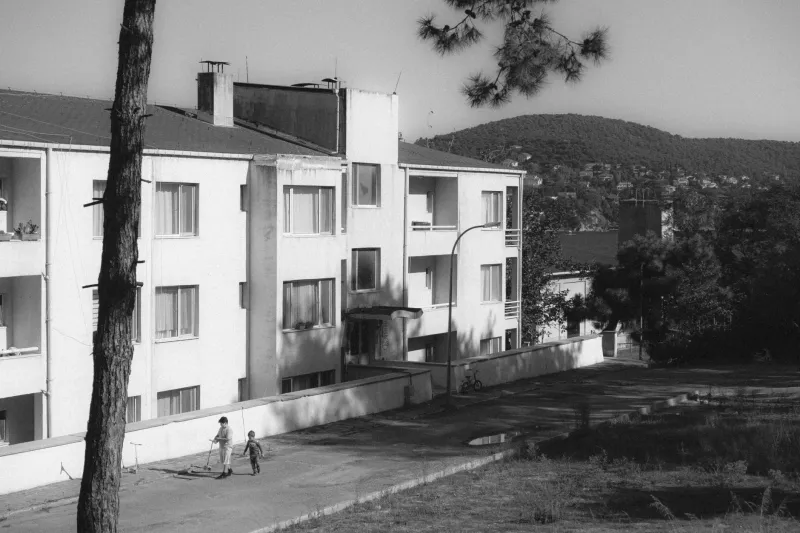
Picture a summer evening in 1967. The sprinklers have been off for an hour. Kids are still outside even though dinner was an hour ago. A few adults have drifted from their front porches to the sidewalk, drinks in hand, talking about nothing in particular — the game last weekend, the Hendersons' new car, whether it might rain by Thursday. Nobody planned this. It just happened, the way it happened most evenings on most streets in most American suburbs.
Now picture the same street tonight. The sprinklers run on a timer. There are no kids outside. Every garage door is closed. The front porches, if they exist at all, are empty. The only sign of life is the blue flicker of screens visible through the windows.
Something changed. A lot of things changed, actually. And most of it happened so gradually that we barely noticed the neighborhood disappearing around us.
When Front Porches Were Living Rooms
The front porch wasn't just an architectural feature in mid-century America — it was a social technology. It positioned you in visible, accessible relationship with the street. You could be seen. Neighbors could stop. Conversations happened by proximity rather than by appointment.
Houses built in the 1940s and 1950s were designed around this logic. Lots were smaller. Streets were narrower. The physical layout of the neighborhood pushed people toward each other. You couldn't pull into your driveway and disappear without at least the possibility of being intercepted by someone who wanted to talk.
Kids operated under a different logic entirely. The street was theirs from after school until dark, and the only rule was to be home by the time the streetlights came on. They ranged across multiple yards, knocked on doors, invented games, settled disputes, and built the kind of low-stakes social competence that comes from spending hours every day around other children without adult supervision. Neighbors knew those kids by name. They knew their parents. They knew which family had just gone through something hard and which one was celebrating something good.
Block parties weren't corporate-sponsored neighborhood events with liability waivers. They were impromptu, recurring, and genuinely communal. Someone put a picnic table in the street. Someone else brought a cooler. It grew from there.
The Things That Took It Apart
Air conditioning is probably the single most underappreciated factor in the death of the American neighborhood.
Before central air became standard in the 1960s and 70s, summer evenings outside weren't optional — they were how you escaped the heat. The front porch wasn't a lifestyle choice; it was a practical necessity. Once air conditioning made indoor life genuinely comfortable year-round, the equation changed. The outside became optional. People chose the inside, and they kept choosing it, and eventually the habit of going outside just to exist in proximity to neighbors stopped being a habit at all.
The garage followed a similar logic. As suburban houses grew larger and lots grew wider through the 1970s and 80s, the attached garage became standard. The new ritual of American domestic life became: pull into the driveway, hit the opener, drive straight in, close the door. You could go weeks without making eye contact with the people who lived twenty feet from your bedroom window.
Then the screens arrived. First television kept people inside in the evenings. Then the internet kept them there in new ways. Then smartphones made the outside world feel slightly less necessary regardless of where you were standing. The social pull of the neighborhood — the low-grade but real gravity that once drew people toward each other — couldn't compete.
Suburban design changed too. Cul-de-sacs replaced through-streets. Backyard fences went up. HOAs standardized the visual landscape while paradoxically reducing the informal contact that once made neighborhoods feel alive. New developments stopped including corner stores, parks within walking distance, or any of the third spaces — not home, not work, but somewhere in between — where casual community used to form naturally.
What the Numbers Tell Us
The data on American social isolation is genuinely alarming when you look at it clearly. In 1985, the average American reported having three close friends they could turn to in a crisis. By 2004, that number had dropped to two. More recent surveys suggest it's dropped further still, and a significant percentage of Americans now report having no close friends at all.
Neighborhood familiarity has followed the same curve. Studies consistently show that Americans today are far less likely to know their neighbors' names, share meals with them, or feel any sense of mutual obligation toward them than previous generations did. The neighbor as a meaningful social category — someone you could call on, lean on, trust — has largely dissolved into the neighbor as a nearby stranger.
This isn't just a sentimental loss. Social connection is one of the strongest predictors of physical and mental health outcomes. The surgeon general's advisory on loneliness in 2023 described an epidemic with mortality effects comparable to smoking fifteen cigarettes a day. The neighborhood wasn't just pleasant to have — it was doing important work.
The Attempts to Bring It Back
People haven't stopped wanting community. The evidence is everywhere: the explosion of neighborhood apps like Nextdoor, the revival of farmers markets as social spaces, the tiny free library movement, the popularity of front-porch furniture in home design despite the fact that most people rarely sit on their porches.
There's also a quiet revival of intentional neighborhood design — new urbanist communities built around walkability, shared green spaces, and the kind of physical layout that makes accidental encounters possible. Some of these work well. They're also, almost universally, expensive, which tells you something about how thoroughly we've commodified the thing we used to have for free.
The honest truth is that most of what made those old neighborhoods work wasn't something you could design or app your way back into. It was a culture of outdoor presence, of unhurried time, of tolerating interruption and welcoming the unplanned conversation. It required a willingness to be slightly inconvenienced by other people, to have your evening derailed by a neighbor who wanted to talk about something you hadn't thought about.
We traded that inconvenience for comfort and control. The garage door closes. The screen glows. The street stays empty.
Somewhere down the block, there's probably someone who would be a good friend if you ever actually met them. You just haven't yet.