When the Whole Neighborhood Raised Your Kids — Before Parents Started Going It Alone
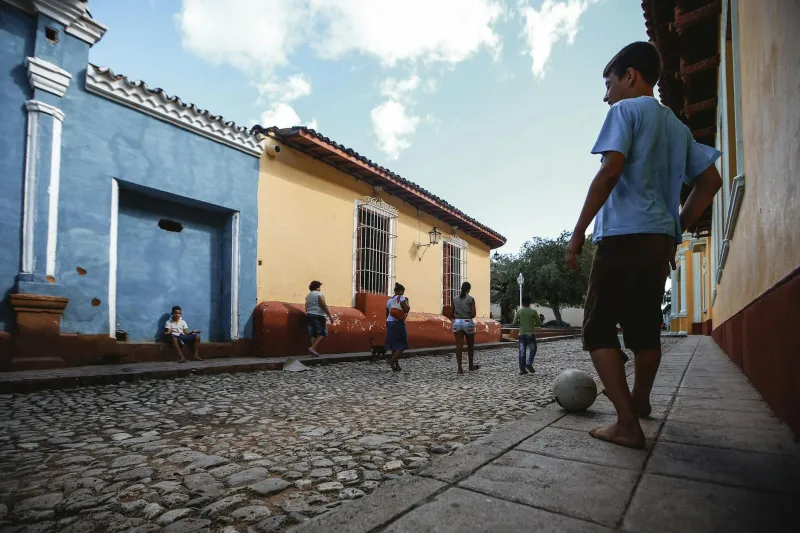
The Street That Knew Every Child's Name
In 1925, if eight-year-old Tommy Johnson threw a rock through Mrs. Peterson's window three blocks from home, he'd face consequences before his mother even heard about it. Mrs. Peterson would march him to the nearest neighbor, who'd send him to sweep her porch while someone walked to fetch his parents. By dinner, half the street would know what happened, and Tommy would have apologized to four different adults who considered his behavior their business.
 Photo: Mrs. Peterson, via i.pinimg.com
This wasn't nosiness — it was how America raised children for most of its history.
When Child-Rearing Had a Whole Cast of Characters
Before World War II, American childhood unfolded within a dense network of invested adults. Grandparents, aunts, and uncles often lived within walking distance. The elderly widow next door kept watch from her front porch. The corner store owner knew which kids were supposed to be in school. Even strangers felt authorized to correct children's behavior in public.
This communal approach wasn't accidental — it was economic necessity. Most mothers worked, whether on farms, in factories, or taking in laundry. Extended family filled the gaps. Children walked to school in groups, played unsupervised until dark, and learned life lessons from whoever happened to be around.
The typical 1920s child might receive daily instruction from their mother, discipline from their father, stories from their grandmother, job training from an uncle, and moral guidance from their Sunday school teacher. Each adult played a specific role in shaping the child's character and skills.
The Great Retreat Into Nuclear Families
The shift began in the 1950s, accelerated by suburbanization and economic prosperity. Families moved away from extended networks to pursue opportunities in new cities. The single-family home with a yard became the American dream — and the American isolation chamber.
Suddenly, parents found themselves solely responsible for their children's development. Mothers, now expected to stay home full-time, became their children's primary teachers, disciplinarians, entertainers, and emotional support systems. The phrase "helicopter parenting" didn't exist yet, but the conditions that would create it were taking root.
By the 1970s, the transformation was nearly complete. Divorce rates climbed, extended families scattered further, and the two-career household became standard. Children who once learned from a village now learned primarily from their parents — and increasingly, from paid professionals.
The Outsourcing of Childhood
Today's parents don't just raise children alone — they pay others to help them do it. The average American family spends $12,000 annually on childcare, plus thousands more on activities that previous generations learned from relatives or neighbors.
Music lessons replaced learning songs from grandparents. Organized sports replaced pickup games supervised by older kids. Tutoring replaced homework help from extended family. Therapy replaced guidance from trusted community elders.
Even basic life skills moved from family transmission to professional instruction. Cooking classes teach what mothers once passed down. Driving schools replaced fathers teaching in empty parking lots. Financial literacy courses attempt to replace the economic wisdom once shared around kitchen tables.
The Mental Load of Going It Alone
Modern parents carry an unprecedented psychological burden. They're expected to be experts in child development, education, nutrition, technology, and mental health. They research preschools like they're choosing colleges. They schedule playdates that once happened spontaneously. They mediate conflicts that children once resolved themselves under community supervision.
The average American mother spends 14 hours weekly on childcare — double what mothers spent in 1965, despite having fewer children. Fathers now spend triple the time their own fathers did. Yet both parents report feeling less confident and more anxious about their parenting than previous generations.
This isn't because modern parents are more neurotic — it's because they're doing a job that was never meant for two people.
What We Lost When We Privatized Childhood
Children raised by communities learned different lessons than those raised by nuclear families. They experienced diverse perspectives, personalities, and approaches to problem-solving. They understood their place in a broader social fabric. They learned to respect authority from multiple sources, not just their parents.
Community-raised children also developed resilience differently. When conflict arose with one adult, others were available for support and perspective. When parents struggled, children had alternative role models and sources of stability.
Perhaps most importantly, children learned that adults other than their parents cared about their welfare and behavior. This created a sense of belonging that extended beyond family boundaries.
The Economics of Isolation
The privatization of childhood reflects broader economic changes. When most Americans lived in stable communities with extended family nearby, communal child-rearing made financial sense. When families became mobile units chasing economic opportunities across the country, that system broke down.
Today's parents often live hundreds of miles from relatives. They change neighborhoods every few years. They work longer hours for employers who show little loyalty. In this environment, paid childcare and professional services become necessities, not luxuries.
The Price of Going It Alone
America's shift from communal to privatized child-rearing created ripple effects nobody anticipated. Birth rates declined as parenting became more expensive and demanding. Mental health issues among both parents and children increased. Social cohesion weakened as families turned inward.
The village that once raised children has largely disappeared, replaced by a consumer marketplace of parenting products and services. We've gained privacy and autonomy, but lost the wisdom, support, and shared responsibility that made raising children feel manageable.
Three generations later, American parents are still figuring out how to raise children without a village — and wondering if they should try to build one again.