When a Glass of Water Could Kill You: The Silent Revolution That Made America's Taps Safe
Turn on a faucet anywhere in America today, and you'll get water cleaner than what royalty drank just 150 years ago. It's so routine, so utterly mundane, that we barely think about it. But this convenience—this basic expectation that water from the tap won't kill us—represents one of the most dramatic public health transformations in human history.
When Water Was the Enemy
In 1900, if you lived in Chicago, New York, or any major American city, a simple glass of water could be your death sentence. Typhoid fever alone killed 35,000 Americans every year. Cholera outbreaks would sweep through neighborhoods like wildfire, claiming entire families in a matter of days. Dysentery was so common that many people considered chronic diarrhea a normal part of urban life.
The numbers were staggering. In 1885, a typhoid outbreak in Plymouth, Pennsylvania killed 1,100 people—roughly 10% of the town's population. Chicago's death rate from waterborne diseases was 159 per 100,000 residents in 1891. To put that in perspective, that's higher than the current murder rate in the most dangerous American cities.
The problem wasn't mysterious. Cities were dumping raw sewage directly into the same rivers and lakes they used for drinking water. The Chicago River, which supplied water to two million people, was essentially an open sewer. New York drew its water from sources contaminated by everything from horse manure to human waste.
Most Americans knew their water was dangerous. The wealthy bought bottled water or had it delivered from distant springs. Others boiled everything, turning a simple drink into a production. Many people, especially immigrants in crowded tenements, had no choice but to drink whatever came out of the nearest pump—and pray.
The Breakthrough That Changed Everything
The revolution began not with a grand announcement, but with a quiet experiment in Jersey City, New Jersey, in 1908. Dr. John Leal, a physician and water treatment pioneer, convinced city officials to try something radical: adding chlorine to the municipal water supply.
The idea was controversial. Chlorine was known as a poison gas—the same substance that would later terrorize soldiers in World War I. Critics worried that the cure might be worse than the disease. But Leal had done his homework. He knew that tiny amounts of chlorine could kill deadly bacteria without harming humans.
The results were immediate and dramatic. Within months, typhoid deaths in Jersey City plummeted by 95%. Word spread quickly through the public health community, and city after city began adopting chlorination. Chicago started chlorinating in 1912 and saw typhoid deaths drop from 1,400 per year to fewer than 200.
Engineering the Impossible
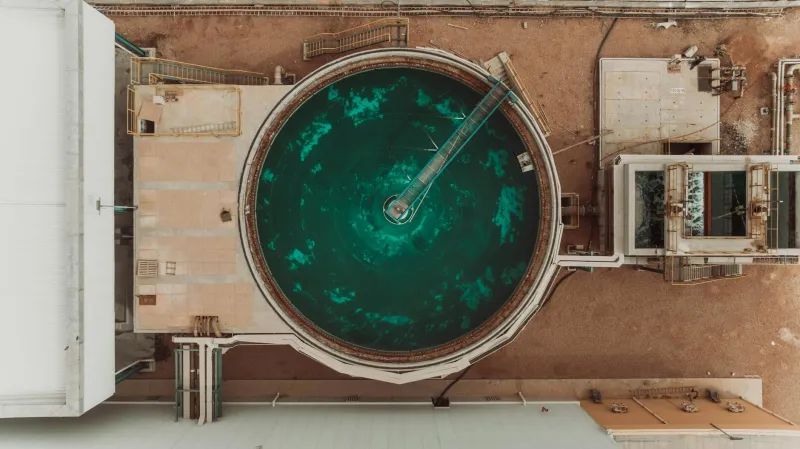
Chlorination was just the beginning. Cities began building elaborate filtration systems that could process millions of gallons daily. Sand filtration, developed in the 1890s, could remove particles and many harmful organisms. Combined with chlorination, these systems created water that was not just safe, but actually cleaner than most natural sources.
The scale of this infrastructure project was mind-boggling. New York built aqueducts stretching hundreds of miles to bring fresh water from the Catskill Mountains. Los Angeles engineered a system to transport water across deserts and mountain ranges. These weren't just pipes—they were some of the most ambitious engineering projects in American history.
By 1930, most major American cities had modern water treatment facilities. The transformation was so successful that people began to forget how dangerous water had once been. A generation grew up taking clean tap water for granted.
The Modern Fortress
Today's American water system would seem like science fiction to someone from 1900. The Safe Drinking Water Act of 1974 established federal standards that are among the strictest in the world. Water utilities must test for over 90 different contaminants, from heavy metals to microscopic parasites.
Modern treatment plants use technologies that would amaze early water engineers: ultraviolet sterilization, reverse osmosis, advanced oxidation processes. Some systems can remove contaminants at the molecular level. The result? American tap water is typically safer than most bottled water—and costs about 1,000 times less.
The numbers tell the story of this revolution. Typhoid fever, which killed tens of thousands of Americans annually in 1900, now claims fewer than 400 lives per year nationwide—and most of those cases are contracted while traveling abroad. Cholera has been virtually eliminated. Waterborne disease outbreaks, when they do occur, make national news precisely because they're so rare.
The Revolution We Forgot
Perhaps the most remarkable thing about America's water transformation is how completely we've forgotten it happened. We turn on taps expecting clean, safe water the way we expect gravity to work. It's become so fundamental to our daily lives that we only notice it when it fails—like during the Flint water crisis, which shocked the nation precisely because safe tap water had become such a basic expectation.
This quiet revolution may be the most successful public health intervention in American history. It prevented more deaths, eliminated more suffering, and improved more lives than perhaps any other single innovation. Yet it happened so gradually, so invisibly, that most people today have no idea how dramatically different things used to be.
The next time you fill a glass from the tap without a second thought, remember: you're experiencing something that would have seemed miraculous to your great-grandparents. That simple act represents one of humanity's greatest victories over disease and death—a victory so complete that we've forgotten we ever needed to fight the battle at all.