You Used to Drive to the Mall for One Song. Now You Have Every Song Ever Made in Your Pocket.
You Used to Drive to the Mall for One Song. Now You Have Every Song Ever Made in Your Pocket.
It's 1994. You heard a song on the radio this morning — maybe it was TLC, maybe it was Green Day, maybe it was something off a movie soundtrack — and now it's stuck in your head and you need to own it.
So you get in the car.
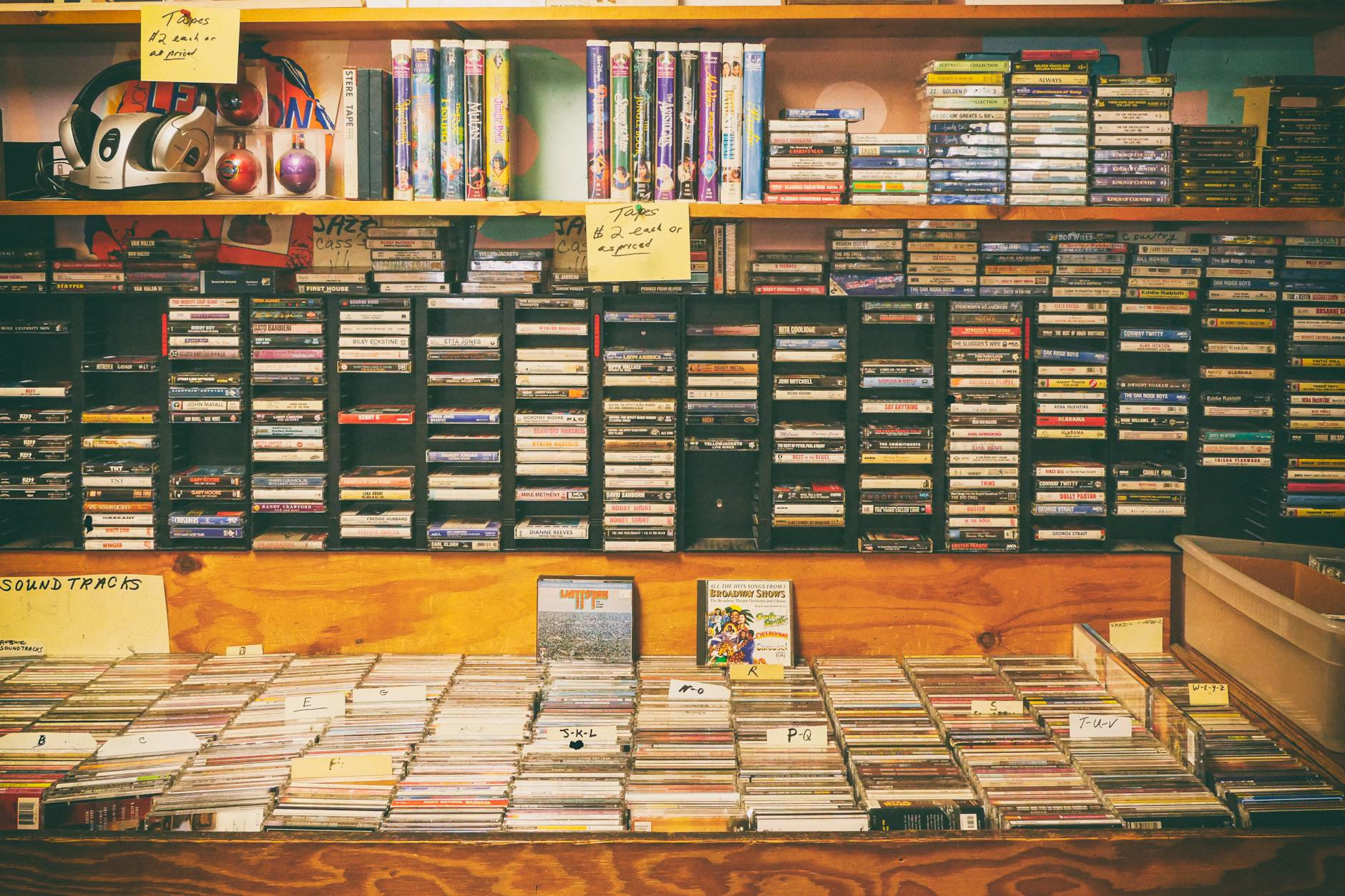
You drive to the mall. You go to Sam Goody or Tower Records or Coconuts Music. You find the album, flip it over to check the track listing, confirm that the song you want is actually on it, and hand over somewhere between $15 and $18. You drive home, tear off the plastic wrap, pop the CD in, and skip straight to track 7.
That's it. That's the whole process. That was just how it worked.
Today, that same song is available in about four seconds. You don't get in the car. You don't spend $18. You tap a screen, and it plays. If you don't like it, you tap again. There are 100 million other options waiting.
The distance between those two experiences — in time, cost, effort, and sheer volume of available music — is one of the most dramatic shifts in American cultural life in the last 30 years. And it happened in stages, each one feeling like a revolution at the time.
The CD Era: Expensive, Physical, and Surprisingly Fragile
The compact disc was genuinely miraculous when it arrived in American stores in the early 1980s. Compared to vinyl and cassettes, the sound quality was cleaner, the format was more durable, and the ability to skip tracks instantly felt almost futuristic. By the early 1990s, CDs had become the dominant music format in the US, and the music industry was printing money.
But the economics were brutal for consumers.
CDs typically cost between $13 and $18 at retail — roughly $28 to $36 in today's dollars. Singles were cheaper, but the industry actively pushed full albums. The result was a familiar frustration: you'd buy a 12-track album for one song you loved and discover that the other 11 tracks ranged from mediocre to genuinely unlistenable. There was no preview beyond the radio. No streaming samples. You were gambling, every single time.
Music discovery happened through radio, MTV, word of mouth, and the judgment calls of whoever worked at your local record store. If you lived somewhere rural, your options were even more limited. The physical nature of music meant that access was inherently tied to geography and disposable income.
Napster Broke Everything (And That Was the Point)
In 1999, a college freshman named Shawn Fanning released a peer-to-peer file-sharing program called Napster, and within 18 months, the music industry's entire business model was on fire.
Napster let users share MP3 files — digital audio files compressed small enough to download over a dial-up connection in a few minutes — freely with anyone else on the network. Suddenly, that $18 album was free. That single you wanted without buying the whole disc was free. Music from artists you'd never heard of, from countries you'd never visited, in genres your local Sam Goody didn't stock — all of it, free, available, immediate.
At its peak in early 2001, Napster had roughly 80 million registered users. The music industry sued it into oblivion. But it was too late to un-ring the bell.
Napster didn't just steal revenue. It fundamentally changed what American listeners expected from music access: everything, now, without friction. Once people experienced that, the $18 CD felt not just expensive but philosophically wrong.
99 Cents and the iTunes Compromise
Apple's answer, launched in 2003, was elegant and perfectly timed. iTunes offered individual tracks for 99 cents — legal, clean, compatible with the iPod that was already in millions of pockets. You could finally buy just the song you wanted. The album, as a mandatory unit of consumption, began its long decline.
For a few years, the 99-cent download felt like the future. Music sales moved online. Physical stores began closing. The iPod became a cultural artifact — that white silhouette dancing against a colored background was everywhere.
But even the download model had limits. You bought a song, you owned a file, it lived on your hard drive. If your hard drive died, the song was gone. And the catalog, while large, still wasn't everything.
The Streaming Era: Infinite Music, Monthly Fee
Spotify launched in the US in 2011. Apple Music followed in 2015. Within a decade, streaming had swallowed the music industry whole.
The current proposition is almost absurd in its scope: for roughly $10 to $11 a month — less than the cost of a single CD in 1994 — you get on-demand access to over 100 million tracks on Spotify alone. Every song, essentially, that has ever been commercially released. Entire catalogs of artists who died before you were born. Obscure regional music from the other side of the world. Podcasts. Audiobooks. Algorithmically generated playlists that learn your taste in real time.
Discovery, once dependent on radio programmers and record store clerks, is now driven by algorithms that serve up new music based on your listening history. Spotify's Discover Weekly playlist — a personalized 30-song list refreshed every Monday — has introduced more Americans to new artists than any radio format in history.
So Did We Win?
Here's the complicated part.
For listeners, the streaming era is an almost unqualified triumph. The access is extraordinary. The cost is reasonable. The friction is essentially zero.
For artists, particularly smaller ones, the math is brutal. Spotify pays between $0.003 and $0.005 per stream. To earn a single US minimum wage monthly paycheck from streaming alone, an artist needs their music streamed roughly 1.5 million times per month. Most artists — even moderately successful ones — don't get there.
The CD era was expensive and inconvenient for fans, but a mid-level artist selling 50,000 albums at $18 wholesale generated real money. That same artist today, with 2 million streams, might earn $7,000.
And then there's the question of attention. When you paid $18 for an album, you listened to it. All of it. Repeatedly. You learned the deep cuts. You read the liner notes. You formed opinions about songs you initially skipped. The scarcity of what you owned made you invest in it.
When every song ever made is available for free with a tap, nothing is quite as precious. Playlists replace albums. Skipping is effortless. The average listener on Spotify skips about 24% of tracks within the first five seconds.
We went from driving to the mall for one song we loved to having every song ever made and sometimes struggling to choose one.
Progress is strange like that. The abundance is real. What we do with it is still being figured out.