The Last Generation to Mend Their Socks — How America Threw Away the Art of Making Things Last
The Suit That Outlasted the Depression
Henry Kowalski bought his wedding suit in 1932 for $18 — nearly a week's wages at the steel mill. He wore it to church every Sunday for the next 23 years. When the jacket grew tight around his middle, his wife let out the seams. When the pants showed wear, she reinforced them with fabric from the inside. When the elbows developed holes, she patched them so skillfully that neighbors asked for her technique.
That suit saw Henry through the Depression, World War II, and the birth of his three children. It was finally retired in 1955, not because it fell apart, but because prosperity finally allowed him to buy a second one.
Henry's relationship with that suit — careful, respectful, almost reverent — represents an entire era's approach to possessions that has vanished from American life.
When Clothes Were Investments, Not Impulses
Before 1960, Americans owned dramatically fewer clothes but kept them dramatically longer. The average woman owned seven dresses and two coats. Men typically owned two suits — one for work, one for Sunday. Children received new clothes twice yearly, and mothers spent autumn evenings lengthening hems and sleeves to accommodate growth spurts.
Clothing consumed 15% of household budgets in 1930, compared to just 3% today. This wasn't just about cost — it reflected a fundamentally different relationship with material goods. Garments were selected carefully, maintained obsessively, and discarded reluctantly.
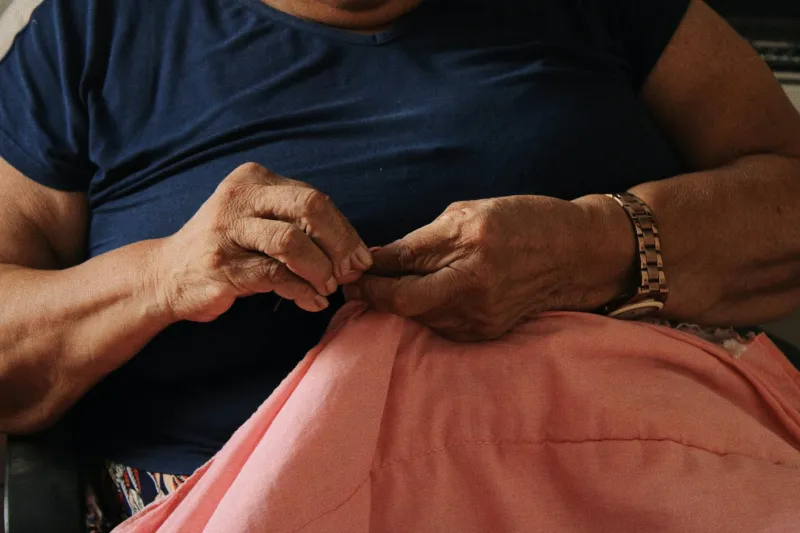
Every household contained a sewing basket stocked with thread, needles, patches, and buttons salvaged from worn-out clothes. Mothers taught daughters to darn stockings, reinforce buttonholes, and turn collars when they frayed. These weren't crafts or hobbies — they were essential life skills, like cooking or driving.
The Art of Making Do
Depression-era Americans elevated clothing maintenance to an art form. They transformed adult coats into children's jackets, turned worn sheets into dish towels, and converted old dresses into aprons. Nothing was discarded until it had served multiple purposes.
Sarah Henderson, who lived through the 1930s in rural Iowa, could remake a man's shirt into a woman's blouse, complete with darts and feminine details. She could patch overalls so the repair became decorative. When her children outgrew clothes, she'd unpick the seams and use the fabric to create something entirely new.
 Photo: Sarah Henderson, via sarahhenderson.com.au
This resourcefulness wasn't born from environmental consciousness — it was economic survival. Waste meant want, and want meant genuine hardship.
The Synthetic Revolution That Changed Everything
The transformation began in the 1960s with synthetic fabrics. Polyester, nylon, and acrylic made clothing cheaper to produce but harder to alter. Unlike wool or cotton, synthetics didn't age gracefully. They pilled, stretched, and developed an unmistakable worn appearance that resisted traditional repair methods.
Simultaneously, manufacturing moved overseas. A dress that cost $30 to make in North Carolina in 1965 could be produced for $3 in Taiwan by 1975. Suddenly, buying new became cheaper than mending old.
Retailers noticed something remarkable: when clothes became disposable, people bought more of them. Fashion cycles accelerated from seasonal to monthly. The concept of "fast fashion" emerged, encouraging consumers to refresh their wardrobes constantly rather than maintain existing pieces.
The Death of Domestic Skills
As clothing became cheaper and more disposable, the skills to maintain it atrophied. Home economics classes stopped teaching garment construction and repair. Mothers who had learned to sew from their mothers found they had no knowledge to pass down to daughters who could buy clothes for less than fabric cost.
By 1990, fewer than 15% of American women could operate a sewing machine competently. Today, that number has dropped below 5%. The average American can't sew on a button, hem pants, or darn a sock — skills that were once as basic as reading or writing.
This represents more than lost domestic knowledge. It reflects a fundamental shift in how Americans relate to their possessions. Previous generations felt responsible for maintaining what they owned. Today's consumers feel entitled to replace what breaks.
The 70-Pound Problem
Modern Americans discard an average of 70 pounds of clothing annually — enough to outfit several Depression-era families for a year. The average woman owns 103 pieces of clothing but wears only 33 regularly. Most garments are discarded after being worn fewer than 10 times.
This disposal rate would have been incomprehensible to previous generations. Henry Kowalski's wife owned three housedresses that she rotated through the week, washing and ironing each one carefully. She would have been baffled by closets full of clothes considered "too old" after a single season.
The environmental impact is staggering. Textile production now generates more carbon emissions than international flights and maritime shipping combined. The fashion industry consumes 93 billion cubic meters of water annually — enough to meet the needs of 5 million people.
The Psychology of Disposability
Fast fashion didn't just change how we buy clothes — it rewired how we think about ownership. Previous generations formed emotional attachments to garments that served them well. They felt pride in maintaining and extending the life of quality pieces.
Today's clothing culture promotes the opposite psychology. Garments are marketed as expressions of momentary identity rather than long-term investments. The thrill comes from acquisition, not maintenance. Wearing the same outfit twice to social events can feel embarrassing rather than practical.
This shift reflects broader changes in American consumer culture. We've moved from a society that valued durability to one that values novelty, from one that prized resourcefulness to one that celebrates convenience.
What We Lost When We Stopped Mending
The decline of clothing maintenance represents more than environmental waste or economic inefficiency. It reflects the loss of a particular relationship with material goods — one characterized by respect, responsibility, and resourcefulness.
Previous generations developed deep knowledge about the things they owned. They understood fabric properties, construction techniques, and repair methods. This knowledge fostered a sense of competence and self-reliance that extended beyond clothing to all aspects of material life.
The act of mending also provided psychological benefits. It required patience, attention, and skill. It connected people to traditions passed down through generations. It offered the satisfaction of solving problems creatively rather than throwing money at them.
The True Cost of Throwing Away
Henry Kowalski's $18 suit, adjusted for inflation, would cost about $400 today. But that suit provided 23 years of service, making its annual cost roughly $17. The average American now spends $1,800 annually on clothing — more than 100 times what Henry spent per year — yet feels less satisfied with their wardrobe.
We've traded the deep satisfaction of owning a few quality pieces for the fleeting pleasure of constant acquisition. We've exchanged the pride of maintaining our possessions for the convenience of replacing them. We've given up the security of self-reliance for the anxiety of endless consumer choice.
The generation that could make a suit last 20 years understood something we've forgotten: the difference between having enough and having everything.