From Kitchen Table to Operating Room: How American Birth Moved Out of the Home in Just 30 Years
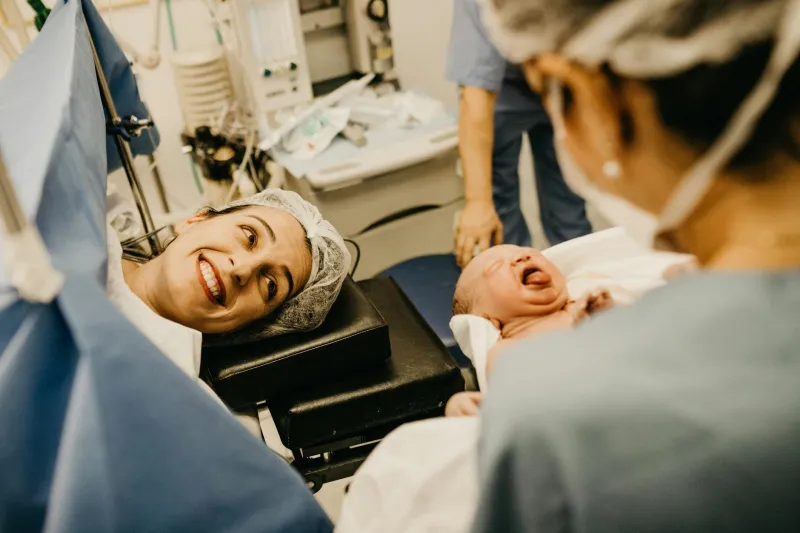
My great-grandmother gave birth to seven children between 1895 and 1912. Every single one was born in the same iron bed in her farmhouse outside Topeka, Kansas. The midwife was Mrs. Henderson from down the road, who'd delivered half the babies in the county. The "delivery room" was whatever room had the best light and the cleanest sheets.
 Photo: Mrs. Henderson, via static.wixstatic.com
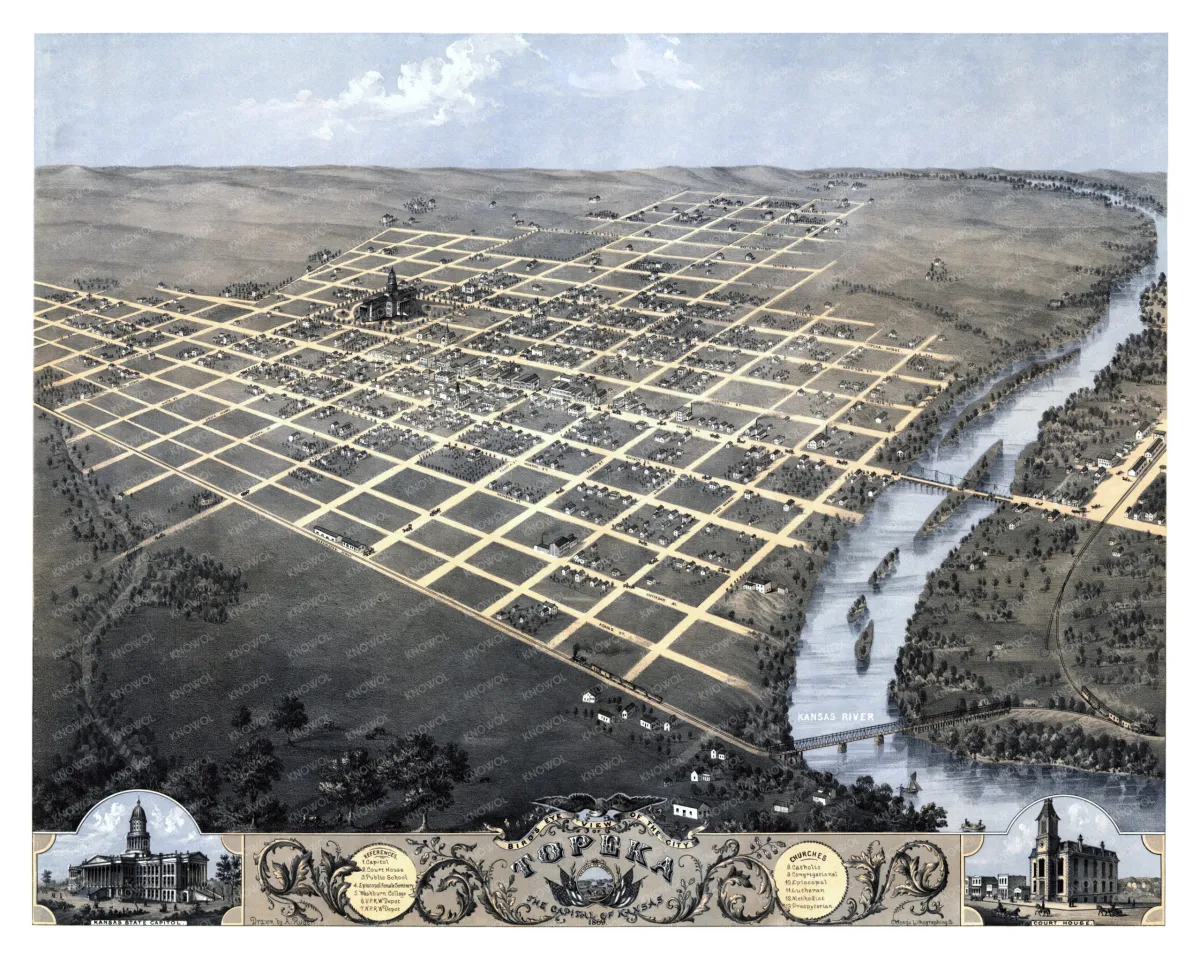 Photo: Topeka, Kansas, via www.knowol.com
By the time my grandmother had her children in the 1940s, that world had vanished. She drove to the hospital when her labor started, was wheeled into a sterile delivery room, and woke up hours later to meet her baby in the nursery. In a single generation, birth had moved from the most intimate family event to the most medical.
The speed of that transformation — and what it meant for American families — tells one of the most dramatic stories of how modern life replaced ancient patterns almost overnight.
When Birth Was a Community Event
For most of human history, including most of American history, birth happened at home. Not by choice, exactly, but because that's where it belonged. Women gave birth in their own beds, surrounded by female relatives and neighbors who'd been through it themselves.
The process was communal and intimate. When a woman went into labor, word spread through the neighborhood. Women arrived with clean rags, hot water, and experience. They knew what to do because they'd done it before — as daughters watching their mothers, as sisters helping siblings, as neighbors supporting neighbors.
Midwives weren't medical professionals in the modern sense. They were women who'd learned by doing, who'd seen hundreds of births, who knew when things were going normally and when they weren't. Mrs. Henderson, my great-grandmother's midwife, had no formal training. But she'd delivered over 400 babies and lost fewer mothers than many trained doctors of her era.
The birthing room was wherever was most convenient — often the kitchen table, sometimes the marriage bed, occasionally the parlor floor. Comfort mattered more than sterility. Family mattered more than protocol.
The Medical Revolution
Everything changed when doctors decided birth was too important to leave to women.
Starting in the early 1900s, the medical establishment began a systematic campaign to move birth from homes to hospitals, from midwives to doctors, from family events to medical procedures. They had good reasons: many home births ended in tragedy, maternal mortality was shockingly high, and medical science was discovering ways to make birth safer.
But the campaign was also about power and money. Male doctors wanted to control a lucrative field that had always belonged to women. Hospitals needed patients to justify their expensive facilities. The entire medical industry was professionalizing, and birth was too big a piece of the puzzle to leave to "untrained" midwives.
The transformation was remarkably swift. In 1900, fewer than 5% of American babies were born in hospitals. By 1940, more than half were. By 1960, it was nearly 97%. In six decades, birth went from an almost entirely domestic event to an almost entirely medical one.
What Hospitals Promised
The hospital pitch was compelling: safety, cleanliness, and professional care. Doctors could intervene if complications arose. Sterile conditions reduced infection risk. Pain relief was available. Mothers could rest and recover without worrying about household duties.
For many women, especially those who'd lost mothers, sisters, or children in difficult births, hospitals offered something priceless: hope that this time would be different.
The medical establishment promoted hospital birth as modern, scientific, and safe. Home birth was reframed as backward, dangerous, and irresponsible. Women who chose home birth were portrayed as risking their babies' lives for sentimental reasons.
The statistics seemed to support the medical case. Maternal mortality dropped dramatically as hospital births became common. Infant mortality fell even faster. By the numbers, the move to hospitals was saving lives.
What Was Lost in Translation
But something else was lost when birth moved from the bedroom to the delivery room: the sense that birth was a natural family event rather than a medical emergency waiting to happen.
In the hospital model, women became patients instead of active participants. They were wheeled into delivery rooms, given medications to manage pain and speed labor, and often separated from their babies immediately after birth. The communal support system that had sustained women through labor for centuries was replaced by medical professionals who, however skilled, were strangers.
Fathers, who had traditionally waited outside during home births, were now excluded entirely. Many hospitals didn't allow fathers in delivery rooms until the 1970s. Children, who might have been present for a sibling's birth at home, were banned from maternity wards.
Birth became something that happened to women rather than something women did. The language changed too: women no longer "gave birth" — they "delivered" babies, as if they were passive vessels rather than active participants.
The Pendulum Swings Back
Starting in the 1960s, some American women began questioning whether medical birth was necessarily better birth. The natural childbirth movement, led by pioneers like Lamaze and Bradley, argued that birth was a normal physiological process that didn't require medical intervention in most cases.
Home birth began a slow comeback, though it never approached its pre-1900 levels. Today, fewer than 2% of American babies are born at home, but the number is growing as some families seek alternatives to the medical model.
Modern home birth looks nothing like my great-grandmother's experience. Today's certified nurse-midwives have extensive medical training. They carry emergency equipment, maintain relationships with nearby hospitals, and can transfer patients quickly if complications arise. They've combined the intimacy of home birth with the safety of modern medicine.
Two Worlds, Same Goal
The irony is that both approaches — the communal home births of 1900 and the medical hospital births of today — aim for the same thing: healthy mothers and healthy babies. The difference is in how they define safety and what they're willing to sacrifice to achieve it.
The old model prioritized emotional comfort and family involvement, accepting higher medical risks. The modern model prioritizes medical safety and professional intervention, accepting reduced family involvement and increased medicalization.
Neither approach is perfect. Hospital births are undeniably safer in terms of measurable medical outcomes. But they've also turned one of life's most profound experiences into a medical procedure, complete with insurance forms, visiting hours, and discharge planning.
The Future of Birth
Today's American women have more choices about birth than any generation before them. They can choose home birth with midwives, hospital birth with doctors, or birthing centers that try to combine the best of both worlds. They can plan natural births or schedule cesarean sections. They can labor in beds, tubs, or on exercise balls.
But all these choices exist within a fundamentally medicalized system. Even the most natural birth today involves more medical oversight than the most complicated birth of 1900. We've gained safety and lost simplicity, and most Americans seem comfortable with that trade-off.
The story of how birth moved from kitchen tables to operating rooms in just 30 years reveals something important about American culture: our faith in progress, our trust in experts, and our willingness to trade tradition for safety. Whether that trade-off was worth it depends on how you measure value — in lives saved or experiences lost, in medical outcomes or family connections.
What's certain is that birth will never again be the community event it once was. The question now is whether we can preserve what was valuable about the old ways while keeping what's lifesaving about the new ones.