Growing Up Dangerous: How American Kids Went From Fearless to Bubble-Wrapped in Three Generations
When Kids Were Expected to Figure It Out
In 1950, a typical six-year-old walked to school alone, played in the street until dinner, and spent summers exploring creek beds and abandoned buildings with zero adult supervision. Parents didn't worry because danger was considered part of growing up.
Children learned to swim by being tossed into ponds. They rode bikes without helmets on roads without bike lanes. Playgrounds featured 12-foot metal slides that burned bare legs in summer and swings suspended over concrete. Car seats didn't exist — kids bounced around back seats like pinballs, and everyone considered this perfectly normal.
Most remarkably, parents weren't considered neglectful for this hands-off approach. They were considered sensible. The prevailing wisdom was that kids needed to experience risk to develop judgment, resilience, and independence.
The Great Safety Revolution
Everything changed starting in the 1970s, but the transformation accelerated dramatically in the 1980s and 90s. Several forces converged to reshape American childhood.
First came the data. Child safety advocates began documenting playground injuries, car accident fatalities, and drowning statistics. The numbers were stark: thousands of kids were dying or getting seriously hurt in ways that seemed preventable.
Then came the lawsuits. Schools, parks departments, and manufacturers faced massive liability claims. A single lawsuit over an unsafe playground could bankrupt a small town, so communities began removing anything that posed even theoretical risk.
Media coverage amplified every danger. The rise of 24-hour news meant that every child abduction, playground accident, or poisoning case got national attention. Parents began seeing threats everywhere, even though most neighborhoods were actually becoming safer.
The Numbers Are Remarkable
In 1969, 48% of children walked or biked to school. By 2009, that number had dropped to 13%. The distance hadn't changed — the average American child still lived about the same distance from school. But parents' comfort with unsupervised travel had evaporated.
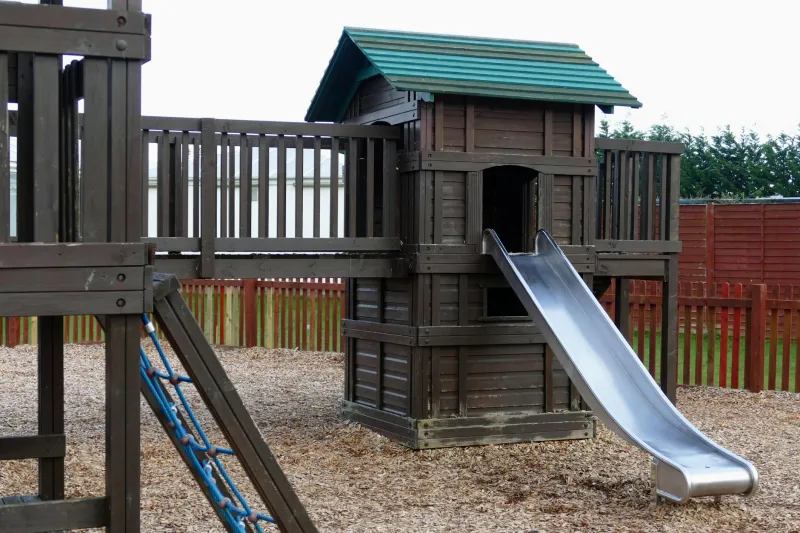
Playground injuries dropped by 80% between 1980 and 2012, but not because kids got more careful. It's because we removed almost everything dangerous. The old metal jungle gyms were replaced by plastic structures with rounded edges, impact-absorbing surfaces, and height restrictions. Seesaws and merry-go-rounds virtually disappeared.
Car safety saw the most dramatic improvements. Child fatalities in vehicle accidents dropped by 75% since 1975, thanks to car seats, booster seats, airbags, and safer vehicle design. This is an unqualified success story — thousands of kids are alive today because of better safety standards.
What Kids Lost in the Process
But something else happened while we were making childhood safer: we made it smaller.
Today's children have dramatically less unsupervised time than their grandparents. They're driven to organized activities instead of creating their own adventures. They play structured sports instead of pickup games. They attend supervised camps instead of disappearing into woods for entire afternoons.
The average American child now spends just 30 minutes per day in unstructured outdoor play, compared to several hours for previous generations. Many kids today have never climbed a tree, built a fort, or walked anywhere alone.
This matters because risk-taking and independent problem-solving were how children traditionally developed confidence and judgment. When a 1950s kid fell out of a tree, they learned to climb more carefully. When they got lost exploring, they learned navigation and self-reliance.
The Anxiety Generation
Paradoxically, as we've made childhood physically safer, we may have made it psychologically more dangerous. Anxiety disorders among children have skyrocketed. Many psychologists believe this is connected to reduced independence and increased adult management of kids' lives.
Children who never face manageable risks may struggle with larger challenges later. College counselors report that today's students often can't handle normal setbacks — a bad grade, a social conflict, a minor injury — without adult intervention.
We've successfully protected kids from broken bones and scraped knees, but we may have left them vulnerable to broken spirits and scraped confidence.
The Impossible Balance
Nobody wants to return to 1950s casualness about child safety. Car seats, playground improvements, and bicycle helmets have saved countless lives and prevented serious injuries. The data is clear: many safety innovations work.
But we've swung so far toward protection that we've forgotten the value of appropriate risk. The goal isn't to make childhood dangerous again — it's to make it adventurous.
The challenge for modern parents is finding the sweet spot between reckless endangerment and paranoid overprotection. Kids need both physical safety and psychological freedom to grow into capable adults.
Somewhere between throwing six-year-olds into ponds and scheduling every minute of their lives lies the childhood that builds both strong bodies and strong spirits.