Farmers Could Read a Storm Coming Three Days Out. Most of Us Can't Read the Sky at All.
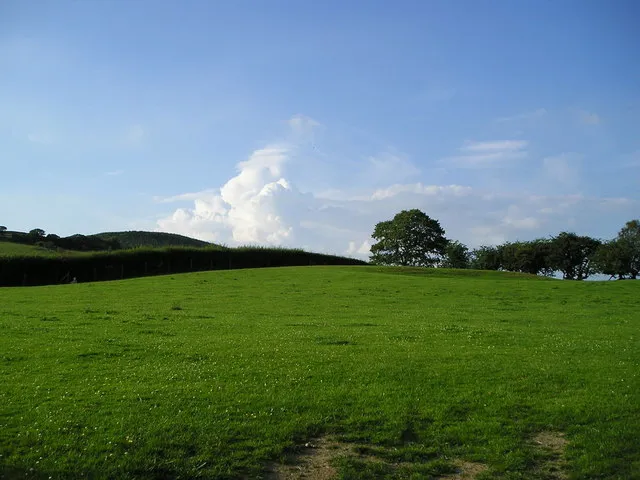
Photo: Marion Phillips, CC BY-SA 2.0, via Wikimedia Commons
Farmers Could Read a Storm Coming Three Days Out. Most of Us Can't Read the Sky at All.
Somewhere in rural Ohio in the 1890s, a farmer steps outside before dawn, looks at the sky, sniffs the air, and tells his wife to get the hay in before noon. There's no weather report. No radio. No barometer on the wall. He's reading something older than instruments — a combination of cloud shape, wind direction, the way the leaves are turning, the behavior of his cattle overnight. By midmorning, the clouds confirm what he already knew. The storm rolls in right on schedule.
That kind of knowing — earned, embodied, passed down through generations — is almost entirely gone from American life. And we barely noticed it leave.
A Literacy Written in Clouds and Wind
For most of human history, reading the weather wasn't a hobby or a specialty. It was a survival skill, as fundamental as knowing how to find water or preserve food. Farming communities, sailors, and anyone who worked outdoors developed a detailed, practical vocabulary for the sky — one that didn't require instruments, only attention and experience.
American farmers and frontierspeople inherited this literacy from European traditions and refined it through generations of observation on the continent's own particular terrain. They knew that a red sky at morning meant moisture moving in. That a ring around the moon signaled high cirrus clouds and incoming low pressure. That when the wind swung from southwest to northwest, a cold front was following behind. That cattle lying down in a field often preceded rain — not superstition, but the animals responding to dropping barometric pressure before humans could feel it.
Native American communities across the continent had developed their own sophisticated frameworks for reading seasonal and daily weather patterns, many of them startlingly accurate by modern meteorological standards. Coastal fishing communities on the Atlantic seaboard could read wave patterns and swell direction to anticipate offshore conditions days in advance.
This wasn't folk wisdom in the dismissive sense. It was data, accumulated over lifetimes and passed from parent to child, refined by failure and confirmed by experience.
When the Professionals Arrived
Organized weather forecasting in America dates to the mid-1800s, when the Smithsonian Institution began collecting weather observations from telegraph stations across the country. The U.S. Weather Bureau — later the National Weather Service — was established in 1870, and for the first time, Americans had access to centralized forecasts.
For decades, though, professional forecasting and folk weather literacy coexisted. Rural Americans who received a forecast still looked at the sky themselves. Fishermen checked the official report and then checked the horizon. The professional forecast was one input among many. Personal observation remained a live skill.
The real displacement came gradually, through the second half of the twentieth century, as America urbanized and moved indoors. When you work in an office, you don't need to know whether rain is coming before noon. When you live in a city, the sky above you is a narrow strip between buildings, its signals harder to read and less immediately consequential. Weather literacy requires practice, and practice requires stakes. Lose the stakes and the practice goes with it.
The App in Your Pocket
The smartphone era finished what urbanization started. By the early 2010s, a detailed hourly forecast was three taps away for every American with a phone. The forecast was often accurate. It was certainly convenient. And it made looking at the sky feel not just unnecessary but vaguely eccentric.
Why develop a feel for cloud formations when an algorithm trained on satellite imagery and decades of atmospheric data can tell you the exact probability of precipitation at 2pm? The app is almost certainly more accurate than your intuition. That's a real argument, and it's not wrong.
But something gets lost in the transaction. When you outsource weather reading entirely to a notification on your phone, you stop looking up. You stop noticing the way the light changes before a storm, the particular stillness that precedes a tornado warning, the smell of rain on dry soil an hour before the first drop falls. You stop being in relationship with the atmosphere around you and become a passive recipient of data about it.
The result is a strange paradox: Americans today have access to more accurate weather information than any generation in history, and many still manage to be caught unprepared by storms that satellite data saw coming for days. Because reading a forecast and reading the environment are different skills, and only one of them tells you to pull over when the sky turns that specific shade of green.
What the Body Forgets
Meteorologists and outdoor educators who work with people on wilderness expeditions often note how quickly basic sky-reading skills can be relearned with a little focused attention. Cumulus clouds building vertically through the afternoon are a reliable signal of afternoon thunderstorms in much of the American interior. Fog burning off by mid-morning typically indicates a clear afternoon. A mackerel sky — those rippled high clouds that look like fish scales — often precedes a weather change within 24 hours.
None of this requires a meteorology degree. It requires looking, which requires the habit of looking, which requires believing that looking matters.
For most of American history, people believed it mattered because their livelihoods — and sometimes their lives — depended on it. That urgency is gone for most of us now, and with it the attention it demanded.
The Cost of Outsourcing the Sky
There's a broader point here that goes past weather. The slow disappearance of sky-reading is one example of a larger pattern: the gradual replacement of embodied, experiential knowledge with passive reliance on technology. We outsourced navigation to GPS, memory to search engines, and social coordination to algorithms. In each case, the technology is genuinely useful. In each case, something harder to quantify goes quiet.
The farmer in Ohio who looked up before dawn wasn't just predicting rain. He was maintaining a living connection with the place he inhabited — a relationship with the land and sky that shaped how he moved through the world. That relationship took generations to build.
We traded it for a push notification. The forecast is usually right. But it doesn't teach you anything about where you live.