America Once Had a Family Doctor Who Knew Your Name. Here's How Medicine Became a Waiting Room and a Stranger.
America Once Had a Family Doctor Who Knew Your Name. Here's How Medicine Became a Waiting Room and a Stranger.
In 1955, when eight-year-old Tommy Henderson scraped his knee playing stickball, his mother didn't Google urgent care clinics or check insurance networks. She called Dr. Murphy, who had delivered Tommy, treated his older sister's strep throat the month before, and would likely be there when Tommy's own children came into the world.
Dr. Murphy knew that Tommy's father worked double shifts at the steel mill, that his mother struggled with anxiety, and that the family budget was tight until payday. When he stitched up that scraped knee in the Henderson kitchen, he charged what the family could afford and threw in a lollipop that he'd grabbed from the jar in his black leather bag.
That America — where healthcare was personal, continuous, and built on decades-long relationships — has vanished so completely that describing it sounds like fiction.
When Your Doctor Was Also Your Neighbor
For most of the 20th century's first half, the family physician was exactly that: a doctor who cared for entire families across generations. These physicians typically served small communities where they knew not just their patients' medical histories, but their family dynamics, financial situations, and personal struggles.
Dr. Sarah Williams, who practiced in rural Nebraska from 1948 to 1985, kept handwritten cards for every patient that included notes like "Johnny's afraid of needles — distract with baseball talk" and "Mrs. Peterson's husband drinks — check for signs of domestic stress." Her medical bag contained everything from aspirin to surgical instruments, because she might need to perform an emergency appendectomy on a kitchen table.
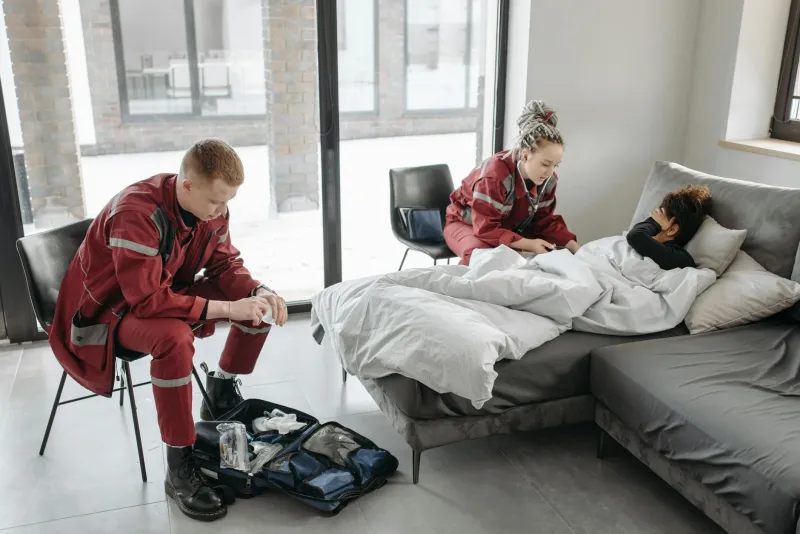
House calls weren't a luxury service — they were standard practice. Doctors expected to be summoned at 2 AM for a difficult birth or a child's high fever. Payment often came in the form of fresh vegetables, homemade bread, or whatever the family could spare. The sliding scale wasn't a formal policy; it was simply how medicine worked.
The Rise of Specialization and Efficiency
The transformation began in earnest during the 1960s and accelerated through the following decades. Medical schools started emphasizing specialization over general practice. Insurance companies began requiring pre-authorizations and limiting which doctors patients could see. Hospitals consolidated into massive health systems that prioritized throughput and standardized care.
By 1980, the average patient interaction had dropped from 30 minutes to 15 minutes. Today, it's closer to seven minutes for a typical primary care visit. The doctor who once sat on your kitchen chair now stands with one hand on the door handle, eyes on a computer screen displaying your electronic health record — a digital file that contains your vital statistics but none of your story.
Modern patients navigate a maze of specialists, each focusing on a single body system. Your cardiologist treats your heart, your endocrinologist manages your diabetes, and your orthopedist handles your knee pain. But no single physician sees how these conditions interact or understands how your job stress, family dynamics, or financial worries might be affecting your health.
What We Gained in the Exchange
This transformation wasn't entirely negative. Modern medicine's specialization has produced miraculous advances that would have seemed impossible to Dr. Murphy. Today's cardiac surgeons can replace entire hearts. Oncologists have turned many cancers from death sentences into chronic conditions. Emergency medicine has become so sophisticated that trauma victims who would have died in 1955 now walk out of hospitals.
The standardization that makes healthcare feel impersonal has also made it more consistent and evidence-based. Your doctor's treatment recommendations now come from rigorous clinical trials rather than personal experience and intuition. Medical errors have decreased dramatically thanks to computerized systems that catch dangerous drug interactions and flag potential problems.
Insurance coverage, despite its frustrations, has made healthcare accessible to millions of Americans who couldn't afford Dr. Murphy's sliding scale fees. Medicaid and Medicare ensure that elderly and low-income patients receive care that would have been financially impossible in the family doctor era.
The Price of Progress
But something profound was lost in this evolution. The continuity of care that allowed doctors to spot subtle changes in their patients' health has been replaced by episodic encounters with strangers. The trust built over decades of shared experiences has given way to hurried consultations where patients feel like problems to be solved rather than people to be cared for.
Studies consistently show that patients with strong doctor-patient relationships have better health outcomes, higher medication compliance, and lower healthcare costs. Yet the modern system makes such relationships nearly impossible to develop. The average American now sees 18.7 different healthcare providers each year.
The emotional support that family doctors once provided — sitting with families during difficult diagnoses, knowing when to bend rules for special circumstances, understanding the broader context of a patient's life — has largely disappeared. Today's physicians, constrained by time pressures and liability concerns, stick to medical facts and evidence-based protocols.
The New Reality of American Healthcare
Walk into any urgent care clinic today, and you'll see the culmination of this transformation. Patients wait in sterile rooms, filling out forms about medical histories that no one will remember next week. The physician who finally sees them is competent and well-trained but knows nothing about their life, their fears, or their family situation.
This isn't necessarily wrong — it's simply different. Modern healthcare excels at treating acute conditions and managing complex chronic diseases. But it struggles with the messy, interconnected reality of human health, where emotional wellbeing, social circumstances, and physical symptoms intertwine in ways that can't be captured in seven-minute appointments or electronic health records.
The family doctor who knew your name and your story has been replaced by a system that knows your insurance ID number and your diagnostic codes. We've gained tremendous medical capability but lost something harder to quantify: the healing power of being truly known by the person caring for your health.
In the end, both versions of American medicine reflect the values and constraints of their times. Dr. Murphy's personal care worked in small, stable communities where people lived their entire lives within a few miles of where they were born. Today's specialized system serves a mobile, complex society where patients expect access to cutting-edge treatments and round-the-clock care.
But on those nights when you're sitting in an emergency room at 2 AM, surrounded by strangers and wondering if anyone really understands what's wrong, you might find yourself longing for a doctor who knew your name — and your story.