America Once Drank Coffee to Wake Up, Not to Make a Statement — The $8 Latte Revolution
When Coffee Was Just Coffee
In 1980, the average American coffee drinker had two choices: regular or decaf. Maybe three if you counted instant. Coffee came from a can, brewed in a percolator, and cost about a quarter per cup. The idea of spending $6 on a single drink — let alone one made with oat milk and flavored with Madagascar vanilla — would have seemed absurd.
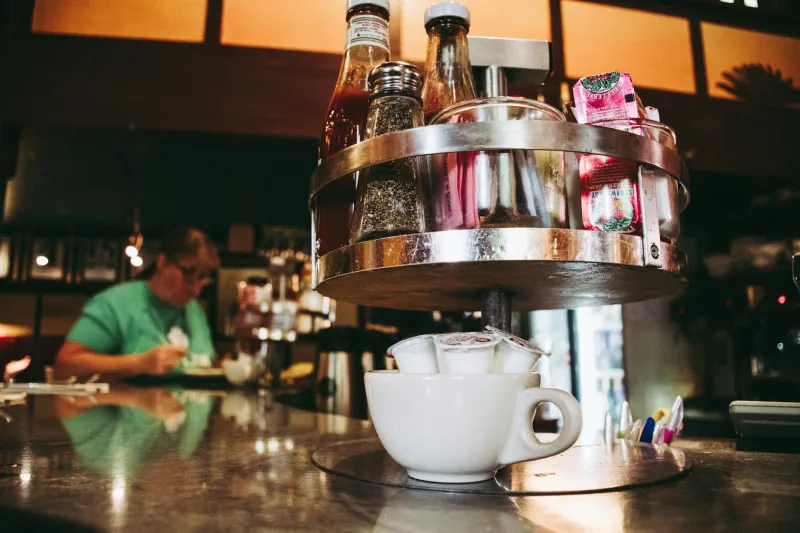
Coffee was utility, not identity. It was the fuel that got factory workers through their shifts, office workers through their afternoons, and truck drivers through the night. Diners served it in thick white mugs with free refills, and most people drank it black or with a splash of cream and sugar.
Today, Americans spend an average of $1,100 per year on coffee — more than many families in 1980 spent on their entire food budget. The transformation from simple stimulant to cultural phenomenon happened gradually, then all at once.
The Folgers Generation
For most of the 20th century, American coffee culture was dominated by a handful of major brands: Folgers, Maxwell House, and Chock Full o'Nuts. These companies sold pre-ground coffee in cans, marketed with jingles that promised "the best part of waking up" was their product "in your cup."
The coffee was cheap, consistent, and unremarkable. Most Americans couldn't tell you where their coffee beans came from, what roast level they preferred, or whether they were drinking arabica or robusta. Coffee was coffee, much like salt was salt or water was water.
A pound of ground coffee cost about $2 in 1980 — roughly $7 in today's money. That pound would make approximately 40 cups of coffee, bringing the per-cup cost to about 17 cents. Compare that to today's specialty coffee shops, where a single cup routinely costs $4-8, and the transformation becomes clear.
Starbucks Changed Everything
The coffee revolution began in Seattle in 1971, but it didn't reach mainstream America until the 1990s. Starbucks introduced Americans to concepts that seem commonplace now but were revolutionary then: different roast levels, espresso-based drinks, and the idea that coffee could be a premium product worth paying extra for.
More importantly, Starbucks sold an experience, not just a beverage. The company's stores were designed as "third places" — somewhere between home and work where people could relax, socialize, or work. This was a radical departure from the grab-and-go coffee culture that had dominated American life.
The chain's growth tells the story of changing American tastes. In 1987, Starbucks had 17 stores. By 2000, it had over 3,000. Today, there are more than 16,000 Starbucks locations in the United States — roughly one for every 20,000 Americans.
The Vocabulary of Coffee Snobbery
Somewhere along the way, Americans developed an entirely new language around coffee. Terms like "single origin," "pour-over," "cold brew," and "nitro" entered everyday conversation. Coffee shops began listing tasting notes like wine menus, describing beans with descriptors like "bright acidity," "chocolate undertones," and "floral finish."
This linguistic evolution reflects a broader cultural shift. Coffee consumption became a form of self-expression, a way to signal sophistication, environmental consciousness, or support for small businesses. The choice between Dunkin' Donuts and a local roastery says something about who you are — or who you want to be.
The rise of specialty coffee coincided with Americans' growing interest in artisanal everything: craft beer, farm-to-table dining, and small-batch manufacturing. Coffee became another arena for displaying cultural capital and refined taste.
The Economics of the New Coffee Culture
The numbers behind America's coffee transformation are staggering. The specialty coffee market has grown from virtually nothing in 1980 to a $45 billion industry today. Americans now consume more coffee per capita than ever before, but they're paying exponentially more for it.
A regular coffee at a gas station convenience store — probably the closest modern equivalent to the diner coffee of 1980 — costs about $1.50. But millions of Americans routinely pay three to five times that amount for drinks with names like "Iced Brown Sugar Oatmilk Shaken Espresso" or "Honey Almond Milk Flat White."
The rise of coffee subscription services has brought the premium experience home. Companies like Blue Bottle and Intelligentsia ship freshly roasted beans directly to consumers, often at prices exceeding $20 per pound — ten times what coffee cost in 1980, even adjusting for inflation.
What Changed Beyond the Bean
The coffee revolution reflects broader changes in American life: rising disposable income, urbanization, and the desire for experiences over things. Coffee shops became the informal offices of the gig economy, filled with laptop-wielding freelancers and remote workers who needed somewhere to go when home felt too isolating.
The shift also reflects changing work patterns. As American jobs moved from manufacturing to services, coffee consumption moved from home and workplace break rooms to retail spaces designed around the coffee experience. The rise of coffee culture paralleled the rise of service economy jobs that allowed for flexible schedules and mid-morning coffee breaks.
The Simple Cup's Last Stand
Despite the specialty coffee boom, plenty of Americans still drink simple, cheap coffee. Gas stations, convenience stores, and fast-food chains serve millions of cups daily to customers who want caffeine without the ceremony. But even these holdouts from the old coffee culture have been influenced by the new one — offering multiple roast options, flavor shots, and milk alternatives that didn't exist in 1980.
The transformation of American coffee culture from utilitarian fuel to lifestyle statement happened in a single generation. Your grandfather's morning routine — percolator coffee, black, maybe with toast — has been replaced by a ritual involving specialized equipment, exotic beans, and vocabulary that would sound like a foreign language to coffee drinkers of 1980.
Looking back, it's remarkable how quickly Americans embraced the idea that coffee could be more than just coffee. In less than forty years, we've transformed a simple daily necessity into a complex cultural phenomenon that says as much about our aspirations as our caffeine needs.