The Great Emptying: How America Shut Down Its Mental Hospitals and Created a New Crisis
The World's Largest Hospital System
In 1955, America operated what amounted to the world's largest hospital system. More than 550,000 people lived in state psychiatric institutions across the country — roughly one in every 300 Americans. These sprawling facilities, some housing tens of thousands of patients, formed entire communities unto themselves. They had their own farms, laundries, kitchens, and workshops. Patients might spend decades within their walls, cut off from the outside world but provided with food, shelter, and basic medical care.
The system wasn't pretty. Overcrowding was rampant, treatments were often primitive or harmful, and patient rights were virtually nonexistent. But for better or worse, it represented America's primary response to severe mental illness: institutional care on a massive scale.
The Promise of Something Better
By the 1960s, a perfect storm of factors converged to challenge this approach. New psychiatric medications like Thorazine offered hope that patients could manage symptoms outside hospital walls. Civil rights advocates exposed horrific conditions in many institutions, while a growing anti-psychiatry movement questioned whether confinement was therapeutic or simply convenient for society.
The Community Mental Health Act of 1963, signed by President Kennedy, promised a revolutionary alternative. Instead of warehousing people in remote institutions, America would create a network of community mental health centers. Patients would receive care close to home, maintaining connections with family and community while living more dignified lives.
It sounded humane, progressive, and cost-effective. State governments, eager to reduce the enormous expense of maintaining these hospital systems, embraced the vision enthusiastically.
The Great Exodus Begins
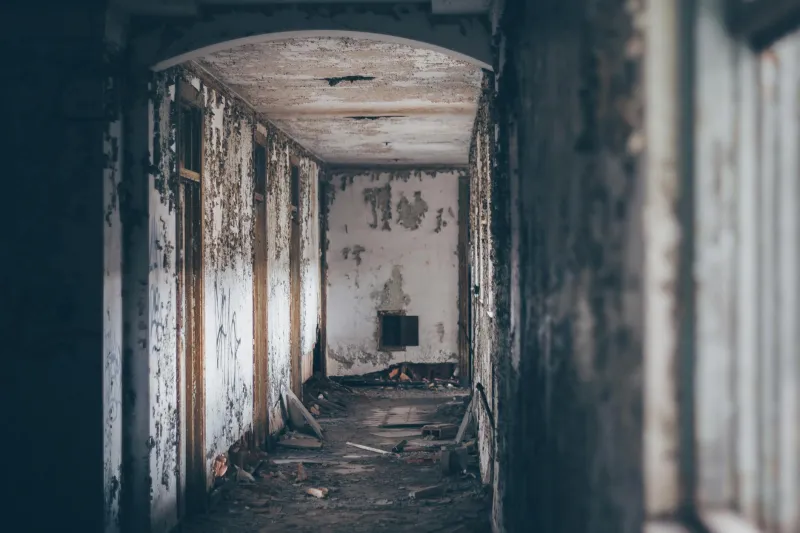
What happened next was breathtakingly swift. Between 1965 and 1980, the resident population of state mental hospitals dropped by nearly 75 percent. Entire wings shuttered. Massive Victorian-era complexes that had anchored communities for generations sat empty, their imposing buildings eventually demolished or converted to other uses.
Patients who had lived institutionalized lives for years or decades suddenly found themselves discharged into communities that were supposed to welcome them with open arms and comprehensive support systems.
But those support systems largely never materialized.
The Missing Safety Net
The community mental health centers that were supposed to replace institutional care were chronically underfunded from the start. While the federal government provided initial construction grants, ongoing operational costs fell to states and localities — the same entities that were simultaneously celebrating the money they saved by closing hospitals.
By 1980, fewer than 800 community mental health centers existed nationwide, far short of the 2,000 originally envisioned. Many served primarily worried middle-class families seeking counseling, not the seriously mentally ill patients being discharged from state hospitals.
Meanwhile, new admissions to psychiatric hospitals became increasingly difficult. Courts established higher bars for involuntary commitment, emphasizing patients' rights to refuse treatment. The result was a one-way door: patients left institutions en masse, but few could return even when community living proved impossible.
Where Did Everyone Go?
The answer became visible on American streets throughout the 1980s and 1990s. Homelessness, which had been a relatively rare phenomenon in post-war America, exploded into a national crisis. Studies consistently found that 25-30 percent of homeless individuals suffered from severe mental illness — roughly the same percentage that would have been institutionalized a generation earlier.
Prisons became the new asylums by default. Today, the Los Angeles County Jail and New York's Rikers Island house more mentally ill individuals than any remaining psychiatric hospital. The Treatment Advocacy Center estimates that individuals with untreated mental illness are 16 times more likely to be killed during a police encounter.
Emergency rooms, never designed for psychiatric care, became revolving doors for people in crisis. The term "frequent flyer" entered medical vocabulary to describe patients who cycled repeatedly through emergency departments, jails, and brief psychiatric holds without ever receiving sustained treatment.
The Numbers Tell the Story
In 1955, America had 340 psychiatric beds per 100,000 people. Today, that number has fallen to just 22 per 100,000 — and most of those are in general hospitals for short-term crisis intervention, not long-term care.
Meanwhile, serious mental illness rates haven't declined. The National Institute of Mental Health estimates that 4.2 percent of American adults experience severe mental illness in any given year — roughly 10.5 million people. That's nearly 20 times the current capacity of all psychiatric beds in the country.
The Unfinished Revolution
Deinstitutionalization wasn't inherently wrong. The old system was often inhumane and frequently ineffective. But America dismantled its mental health infrastructure without building an adequate replacement, creating a crisis that plays out daily on city streets, in emergency rooms, and behind prison walls.
Some communities have developed innovative models that work — assertive community treatment teams, supported housing programs, and specialized courts that divert mentally ill defendants from incarceration. But these remain exceptions rather than the rule.
The great emptying of America's mental hospitals represents one of the most dramatic policy reversals in modern history. It promised liberation and delivered, for many, a different kind of confinement — one without walls, but also without the basic guarantees of food, shelter, and care that institutions, however flawed, had provided.
Sixty years later, America is still grappling with the consequences of tearing down one system before building another.